Malcolm Smith
I was deep in a hollow across the state line in West Virginia, sitting knee to knee with some of the best old time musicians I’d ever met. My banjo was ringing with dark, ancient melodious sounds. Somehow, by the grace of god, I was keeping up as we travelled the twisty, curvy, crooked melodies that have been played in hollers such as this for a couple of hundred years. The modal tune we were playing was coming to an end and I wanted to put my indelible mark on it. Pure vanity. Then I did it. Right as the six or so pickers; fiddlers, guitarists, and the bass player, ended in complete synchrony on the perfect lonesome note, my hands could not be stopped as they plucked out a modal sounding ”shave and a haircut, two bits.”
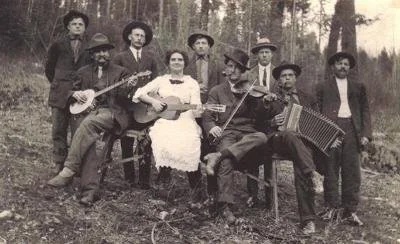
Nailed it. Well, killed it might be a better way to put it. Everyone in our tightknit circle just stared at me. The disdainful silence was painful. I had ruined what was otherwise a perfect jam tune. I put a trite ending on a masterpiece, therefore trashing the otherwise perfect tune for just about everyone.
I do have a defense for my behavior, however. Geography, pure and simple. See, up on the Blue Ridge in Carroll County, VA. where I live and spend most of my life as a professional jam attender, we tag everything. We have single tags, double tags and even triple tags. Sometimes even waltzes get a few notes of tag. It’s the way of the music in my home region. Definitely not the way of the jam in West Virginia or, as it turns out many other places old time music is shared.
This moment of major embarrassment started me thinking, as major screwups tend to do in my life, “What the hell is the deal on tags?” When is it OK to use them? What type of tag is right for what type of tune, and how the hell do you decide? And, how does geography, culture, history, and the fiddler’s personality have to do with how you end a damn old time tune? Most importantly, I wondered how I could keep from the receiving a deadly silence and cutting stares of disapproval when I’m ending a tune outside of the Blue Ridge.
So, I did what I do best. I started asking a lot of questions. For the past several months, I’ve been interrupting jams all over the place by steering the discussion towards endings, tags, physical signals among musicians and, in general, being a folkloric pest. Soon, at old time music jams all over the region, people stopped making eye contact with me for fear of my asking them about tags.
The results of these queries were varied and sometimes a little scary (no one likes a long talker in an old time jam, even though it’s supposed to be about community) but what I mostly learned is that there absolutely is no hard and fast rule about how to stop an old time tune – it’s mostly left up to the fiddler, and they are not an easy bunch of people, in general to pin down.
After hours of “jam interruptus,” I developed a somewhat cohesive list of responses to my first question:
What is the purpose of an audible tag ending in old time music?
Basically, my respondents came up with these rationalizations for providing a tag on an old time tune:
- First, of course, was the most obvious. The tag ending serves to alert other musicians that the tune is over. In a jam situation, this is usually preceded by someone kicking up a leg from their chair in the circle, a fiddler grunting “yup,” “last time,” “here we go,” or some other audible grunt. It takes the average old time musician at least two types of communication to snap out of their drooling, eyes rolled to the back of the head trance, and play the ending notes. Still, there is always that one guy or who is too deep in the tune to get the signals and they end up carrying on and looking rather foolish, thus ruining any jamonious harmony. Nearly every old time musician has witnessed a tune die a trainwreck of an ugly death because someone wasn’t paying attention! In other words, the perfect old time jam tune ends with everyone stopping together and a tag, particularly one everyone knows and anticipates makes all the jammers feel like pros.
- The second range of responses made a lot of sense to me: Old Time music is all about dancing and a tag of some sort alerts the dancers that the tune is ending and prepare for stopping. As one local fiddler who is also a square dance caller and flatfooter put it, “Tags keep the dancers from crashing and burning.” Enough said. Old time community safety at its best.
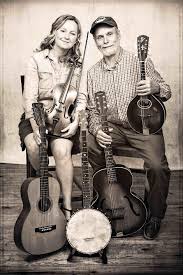
Carroll County, VA, fiddler Erynn Marshall, who moved from her home in Canada to study with regional fiddlers and who, with her husband, Carl Jones, teaches and plays old time music full time, found this connection in SW Virginia to be at first surprising:
“When I encountered tags in my younger years as a fiddle player (like the classic one that matches the rhythm of “shave and a hair-cut – two bits”) I thought they sounded goofy. I didn’t see the value in playing them. However, as I became more immersed in old-time music, learned trad dance, moved to the Blue Ridge where I’ve been most of the last two decades, this opinion changed.
Clearly, ending tags have a purpose especially in a place with living dance traditions. Ending tags let dancers know when a tune will end and you will often hear them at dances, jams with dancers present, clogging team performances and they are always played for dance contests. Ending tags are also commonly played at instrumental jams as well which helps a large group of musicians to end together as well. More experienced fiddlers also play signature ending tags associated with influential fiddlers from the past including: Otis Burris, Benton Flippen and others. By playing these tags today, fiddlers give a respectful nod to older fiddlers of the past creating a continuity of tradition.
Ending tags are very common in SW VA and in the Round Peak region of NC though you will also hear them elsewhere. I think they will always be heard in areas/communities where square-dance and step-dance (flatfoot, buckdance, clogging) traditions are alive and frequent. Ending tags are not used on all tunes here in SW Virginia. There are plenty of moody sounding, slower or non-dance tunes that don’t suit a double tag ending. That said, knowing some good ending tags or being able to improvise one on the spot is as important for a fiddler in the Blue Ridge to know as is being able to kick off a tune with “taters” for a strong start,” said Erynn.,
- The third group of responses centered around the ego of the fiddler: Tags are a method for a fiddler to put his/her unique mark on a tune. This is sort of like tagging your gang’s name on a railroad car with graffiti. The fiddler basically puts his trademark ending on the tune so that everyone knows who is the boss of any old time tune. It’s not the guitar, not the bass, and certainly not the banjo. Fiddlers are like that. As one of them told me “It’s how I put my personal ‘stank’ on a tune, sort of like a cat spraying around the house.” Not a metaphor I would have used, but it works. This type of ending is often accompanied by an “I told you so” sort of look on a fiddler’s face.

- Fourthly, one of the most popular responses to my question about the purpose of tags is following tradition. A great example is the comment of midwestern fiddler Tricia Spencer (who is a frequent performer at Blue Ridge events.)
“ I have ones that I have learned from the old fiddlers I learned from,” said Tricia, “I might have modified them a bit but I appreciate the nod to the fiddler who I might have borrowed the tag from. My Grandpa had an interesting way to end his tunes and I like to use his. My silly self likes to just use the shave and a haircut,” Tricia told me.
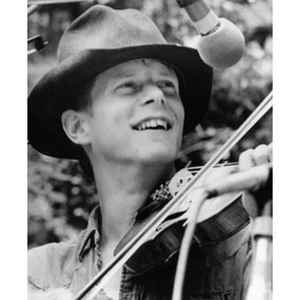
Legendary old time musician, Walt Koken, an original member of the Highwoods String Band, one of the most popular traditional revival bands of the “folk scare” era of the 70’s and 80’s told me this:
“When we first started our journey into old time music, we immersed ourselves in the music of fiddler Arthur Smith,” he said, “Arthur ‘double tagged’ everything. Well, we practiced up and took our band on the road to the Blue Ridge. We found that when we played with musicians in that part of the country, they also tagged it all, so we just followed who we admired,” said Walt.
So, these answers form an old, worn out response often used by members of the academic community. The real answer to the question of why tag a tune in old time communities is “It depends.”
An Array of Signals
The most common way to let folks in a jam know that the tune is ending seems to be a physical lifting of the right or left leg during the last refrain. I’ve seen this done in a variety of ways, from petite and demur foot lifting, to high over the head kicks. This is usually performed by whoever in the hell started the seemingly never-ending tune, but in some jams, particularly up north, members of the group can “veto” the fiddler’s intention by raising both legs with their heels together and toes forming a perfect “V.” This is telling the fiddler that this person of people are not ready to end the tune, no matter how tired and how much foam is coming from the fiddler’s mouth or drool falling from the mouths of banjo players.
Another signal is what I call the “ending grunt.” As most of you know, trying to talk and play the fiddle at the same time can be very hard to execute. So, many fiddlers (sometimes too stocky or too drunk to lift a foot without falling over backwards,) try to call out to everyone that they are ready to stop the tune. I’ve heard “hup,” “last time,” “here we go,” and a variety of guttural sounds come out of fiddlers who seem to be crying for the groups help to end the tune. This noise is purely at the discretion of the fiddler. Tommy Jarrell, the legendary fiddler from North Carolina, would often shout “Let’s catch it this time!,” or another of his favorites: “Let’s roll it over one more time.
Some very astute fiddlers give out musical notice that the tune is ending. It can be a pause during the last time around, a series of quick bow strokes, or a specially concocted phrasing that fits the tune, but alerts the hoards that they end is near. This is a cue often used on stage and becomes a type of dialogue with the rest of the band. Caution. Don’t try this one at your home jam, it could cause total cacophony.
Of course, fiddlers generally have a bag of tricks when it comes to signaling the end is nigh. This signaling can include a head nod, an animated change of body position, a big cheesy smile, or a big arm movement with the bow hand. Those more subtle signals often don’t work in a jam, because there are always those members, who like me, like to enjoy the jam “trance” that old time music is so famous for with their eyes closed. Contemporary old time musician Bruce Molsky once characterized coming out of an old time trance by noting, “Old time tunes don’t end, they land.”
Tunes that signal the Jam itself is ending
In some jam cultures, certain tunes can be a sad signal from the fiddler to the rest of the group that the jam is over and that fiddler might be tired, drunk, or both, or that the venue hosting the jam is ready for the music to stop and it’s time to pack up the instruments. One of the traditions here in SW Virginia comes from fiddler Albert Hash, the founder of the White Top Mountain Band that has been playing for dances for nearly fifty years. Although Albert died in 1983, his influence is still felt. For many years, Albert’s favorite tune was one that came to our mountains by way of Canada.
The tune “Hangman’s Reel” that Albert both popularized and regionalized by creating his own three part version, seems to be a fitting ending to raucous gathering of musicians. It’s wild, fast, and loved by dancers of all types. At places like the Floyd Country Store in Floyd County, VA; The Phipps Store Jam over in the NC Blue Ridge in Ashe County, and at private and campground jams across our region, Albert’s “Hangman’s Reel” let’s everyone know the fun is soon all over.
I’ve been in jams in NC where Tommy Jarrell’s version of “Sally Ann” is always the fiddler’s way of ending the session. It is often referred to as the “Surry County National Anthem” because of its frequent use as a jam ender. It is always played with fire and reverence.
Some performers like to end their stage shows with a particular tune. Ralph Stanley, legendary banjoist for the Clinch Mountain Boys would end every concert he played by playing a clawhammer banjo tune to honor his mother, who taught him to play, by frailing out “Shout Little Lulu,” the first tune his mother, Lucy, taught him.
Deep in the Ozark Mountains in places like Mountain View fiddlers have a tradition of alerting the jam crowd that they are in need of refreshment. When a Missouri Ozark fiddler plays the tune “Dry and Dusty,” someone better get the fiddler a drink and quick, or he or she is on the way out the door. Usually something in a Mason jar or a plastic milk jug appears, magically in the fiddler’s hands. It usually contains a very suspicious smelling clear liquid!
Kentucky fiddle master, John Morgan Salyer a very influential fiddler from Magoffin County, often rode his mule to local gatherings. Salyer was by no means a commercial fiddler, he refused to record commercially because he was afraid to compromise his unique style. When you were in a session with John, you knew it was about to end when he would turn to his mule and famously say, “Giddy-up thar Kate, we can make more money plowin’ than we can playin’ the fiddle!”
“Just a place where ya stop.”
Having lived up in New England for several years (a life event I often regretted), I quickly learned that stoic Northern jams rarely, if ever tag a tune for any reason. They just shut down on the last note and stare threateningly at anyone who doesn’t end with the rest of the bunch. It’s a stoic kind of New England thing. But, understand, except at Contra-Dances, that require a very different kind of playing, jams and performances in the North are much more reverent and esoteric and often involve crooked and unusual tunes that aren’t necessarily rowdy dance tunes or are dance tunes that are played in a non-dance inspired manor. Lots of navel pondering in jams up there!
Down over the mountain I live on, in North Carolina, the Round Peak tradition is one that requires strict adherence to those that played the tune in an earlier era. Learning a tune also means learning how certain fiddlers ended the tune. Tradition is the key ingredient in tagging a Round Peak tune.
Geography and local culture influence the way tunes are ended. In West Virginia, for example, the geography of the mountains means that fiddlers, like the legendary Burl Hammons and his family, lived in hard to get to and out of the way places and fiddling was often more lonesome, solitary and melodic and less about filling a large dance hall. There, where tunes are passed in kitchens and porches, tunes don’t need a driving, rigid ending. They often just trail the tune off on the final note or end on a droning, sustained fiddle chord.
In isolated mountain communities in West Virginia and Kentucky, the original fiddle banjo combination is often preferred to large gatherings. Often there was no need to follow a rigid, eight bar structure. Thus, fiddlers often played what sounded right to them. This birthed a tradition of “crooked” tunes that have extra beats, are missing half-measures or have strange phrasing that isn’t symmetrical. This makes the tune pretty hard to predict where endings are concerned. The tune just ends whenever the hell the melody resolves itself. In these twisty, haunting tunes, often modal, only the fiddler knows where that is.
In flatter places like Kansas, Texas and much of the deep South (Alabama or Mississippi for example) fiddlers often played in larger gatherings in more formalized community square dances. In those regions, tunes had to be “straight,” so the dance callers and their minions could stay in synchrony and folks did fall all over each other trying to figure out what to do with crooked notes or phrasing. In the flatlands, tags and novelty endings rule.
So, here’s what my journey down the rabbit hole of proper tune endings has taken me:
How you end just seems to depend on where you are, who’s playing and who’s interacting with that playing, and, of course on local tradition. In earnest, it seems we should just follow the rule that one of our most remembered and beloved tune leaders often said. When asked how to end a tune, Tommy Jarrell would retort: “Old time tunes don’t have an endin,’” he said, “They just have a place where ya stop.”


 A Voice from the Holler: Dispatches from The Blue Ridge