Happy Endings (or how I solved my tag thing)

Malcolm Smith

I was deep in a hollow across the state line in West Virginia, sitting knee to knee with some of the best old time musicians I’d ever met.  My banjo was ringing with dark, ancient melodious sounds.  Somehow, by the grace of god, I was keeping up as we travelled the twisty, curvy, crooked melodies that have been played in hollers such as this for a couple of hundred years.  The modal tune we were playing was coming to an end and I wanted to put my indelible mark on it.  Pure vanity.  Then I did it.  Right as the six or so pickers; fiddlers, guitarists, and the bass player, ended in complete synchrony on the perfect lonesome note, my hands could not be stopped as they plucked out a modal sounding ”shave and a haircut, two bits.” 
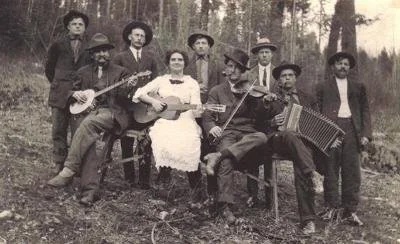
Nailed it. Well, killed it might be a better way to put it. Everyone in our tightknit circle just stared at me.  The disdainful silence was painful.  I had ruined what was otherwise a perfect jam tune.  I put a trite ending on a masterpiece, therefore trashing the otherwise perfect tune for just about everyone.

I do have a defense for my behavior, however.  Geography, pure and simple.  See, up on the Blue Ridge in Carroll County, VA. where I live and spend most of my life as a professional jam attender, we tag everything.  We have single tags, double tags and even triple tags.  Sometimes even waltzes get a few notes of tag.  It’s the way of the music in my home region.  Definitely not the way of the jam in West Virginia or, as it turns out many other places old time music is shared.

This moment of major embarrassment started me thinking, as major screwups tend to do in my life,  “What the hell is the deal on tags?”  When is it OK to use them? What type of tag is right for what type of tune, and how the hell do you decide? And, how does geography, culture, history, and the fiddler’s personality have to do with how you end a damn old time tune?  Most importantly, I wondered how I could keep from the receiving a deadly silence and cutting stares of disapproval when I’m ending a tune outside of the Blue Ridge.

So, I did what I do best.  I started asking a lot of questions.  For the past several months, I’ve been interrupting jams all over the place by steering the discussion towards endings, tags, physical signals among musicians and, in general, being a folkloric pest.  Soon, at old time music jams all over the region, people stopped making eye contact with me for fear of my asking them about tags.

The results of these queries were varied and sometimes a little scary (no one likes a long talker in an old time jam, even though it’s supposed to be about community) but what I mostly learned is that there absolutely is no hard and fast rule about how to stop an old time tune – it’s mostly left up to the fiddler, and they are not an easy bunch of people, in general to pin down.

After hours of “jam interruptus,” I developed a somewhat cohesive list of responses to my first question: 

What is the purpose of an audible tag ending in old time music?

Basically, my respondents came up with these rationalizations for providing a tag on an old time tune:

  • First, of course, was the most obvious.  The tag ending serves to alert other musicians that the tune is over In a jam situation, this is usually preceded by someone kicking up a leg from their chair in the circle, a fiddler grunting “yup,” “last time,” “here we go,” or some other audible grunt.  It takes the average old time musician at least two types of communication to snap out of their drooling, eyes rolled to the back of the head trance, and play the ending notes.  Still,  there is always that one guy or        who is too deep in the tune to get the signals and they end up carrying on and looking rather foolish, thus ruining any jamonious harmony. Nearly every old time musician has witnessed a tune die a trainwreck of an ugly death because someone wasn’t paying attention!  In other words, the perfect old time jam tune ends with everyone stopping together and a tag, particularly one everyone knows and anticipates makes all the jammers feel like pros.
  • The second range of responses made a lot of sense to me: Old Time music is all about dancing and a tag of some sort alerts the dancers that the tune is ending and prepare for stopping.  As one local fiddler who is also a square dance caller and flatfooter put it, “Tags keep the dancers from crashing and burning.”  Enough said.  Old time community safety at its best.
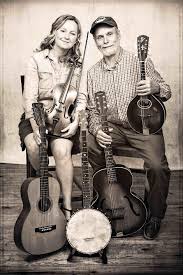
Carroll County, VA, fiddler Erynn Marshall, who moved from her home in Canada to study with regional fiddlers and who, with her husband, Carl Jones, teaches and plays old time music full time, found this connection in SW Virginia to be at first surprising:

“When I encountered tags in my younger years as a fiddle player (like the classic one that matches the rhythm of “shave and a hair-cut – two bits”) I thought they sounded goofy. I didn’t see the value in playing them. However, as I became more immersed in old-time music, learned trad dance, moved to the Blue Ridge where I’ve been most of the last two decades, this opinion changed. 

Clearly, ending tags have a purpose especially in a place with living dance traditions. Ending tags let dancers know when a tune will end and you will often hear them at dances, jams with dancers present, clogging team performances and they are always played for dance contests. Ending tags are also commonly played at instrumental jams as well which helps a large group of musicians to end together as well. More experienced fiddlers also play signature ending tags associated with influential fiddlers from the past including: Otis Burris, Benton Flippen and others. By playing these tags today, fiddlers give a respectful nod to older fiddlers of the past creating a continuity of tradition.

Ending tags are very common in SW VA and in the Round Peak region of NC though you will also hear them elsewhere. I think they will always be heard in areas/communities where square-dance and step-dance (flatfoot, buckdance, clogging) traditions are alive and frequent. Ending tags are not used on all tunes here in SW Virginia. There are plenty of moody sounding, slower or non-dance tunes that don’t suit a double tag ending. That said, knowing some good ending tags or being able to improvise one on the spot is as important for a fiddler in the Blue Ridge to know as is being able to kick off a tune with “taters” for a strong start,” said Erynn.,  

  • The third group of responses centered around the ego of the fiddler: Tags are a method for a fiddler to put his/her unique mark on a tune.  This is sort of like tagging your gang’s name on a railroad car with graffiti.  The fiddler basically puts his trademark ending on the tune so that everyone knows who is the boss of any old time tune.  It’s not the guitar, not the bass, and certainly not the banjo.  Fiddlers are like that.  As one of them told me “It’s how I put my personal ‘stank’ on a tune, sort of like a cat spraying around the house.”  Not a metaphor I would have used, but it works. This type of ending is often accompanied by an “I told you so” sort of look on a fiddler’s face.

  • Fourthly, one of the most popular responses to my question about the purpose of tags is following tradition. A great example is the comment of midwestern fiddler Tricia Spencer (who is a frequent performer at Blue Ridge events.) 

“ I have ones that I have learned from the old fiddlers I learned from,” said Tricia, “I might have modified them a bit but I appreciate the nod to the fiddler who I might have borrowed the tag from. My Grandpa had an interesting way to end his tunes and I like to use his. My silly self likes to just use the shave and a haircut,” Tricia told me.
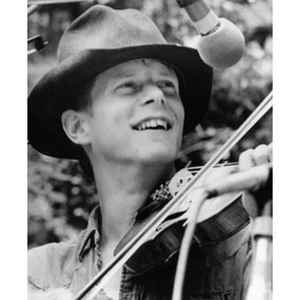
Legendary old time musician, Walt Koken, an original member of the Highwoods String Band, one of the most popular traditional revival bands of the “folk scare” era of the 70’s and 80’s told me this: 

“When we first started our journey into old time music, we immersed ourselves in the music of fiddler Arthur Smith,” he said, “Arthur ‘double tagged’ everything.  Well, we practiced up and took our band on the road to the Blue Ridge.  We found that when we played with musicians in that part of the country, they also tagged it all, so we just followed who we admired,” said Walt.

            So, these answers form an old, worn out response often used by members of the academic community.  The real answer to the question of why tag a tune in old time communities is “It depends.”

An Array of Signals  

            The most common way to let folks in a jam know that the tune is ending seems to be a physical lifting of the right or left leg during the last refrain.  I’ve seen this done in a variety of ways, from petite and demur foot lifting, to high over the head kicks.  This is usually performed by whoever in the hell started the seemingly never-ending tune, but in some jams, particularly up north, members of the group can “veto” the fiddler’s intention by raising both legs with their heels together and toes forming a perfect “V.”  This is telling the fiddler that this person of people are not ready to end the tune, no matter how tired and how much foam is coming from the fiddler’s mouth or drool falling from the mouths of banjo players.

            Another signal is what I call the “ending grunt.”  As most of you know, trying to talk and play the fiddle at the same time can be very hard to execute.  So, many fiddlers (sometimes too stocky or too drunk to lift a foot without falling over backwards,) try to call out to everyone that they are ready to stop the tune.  I’ve heard “hup,” “last time,” “here we go,”  and a variety of guttural sounds come out of fiddlers who seem to be crying for the groups help to end the tune.  This noise is purely at the discretion of the fiddler.  Tommy Jarrell, the legendary fiddler from North Carolina, would often shout “Let’s catch it this time!,” or another of his favorites: “Let’s roll it over one more time.

            Some very astute fiddlers give out musical notice that the tune is ending.  It can be a pause during the last time around, a series of quick bow strokes, or a specially concocted phrasing that fits the tune, but alerts the hoards that they end is near.  This is a cue often used on stage and becomes a type of dialogue with the rest of the band.  Caution. Don’t try this one at your home jam, it could cause total cacophony.

            Of course, fiddlers generally have a bag of tricks when it comes to signaling the end is nigh.  This signaling can include a head nod, an animated change of body position, a big cheesy smile, or a big arm movement with the bow hand.  Those more subtle signals often don’t work in a jam, because there are always those members, who like me, like to enjoy the jam “trance” that old time music is so famous for with their eyes closed. Contemporary old time musician Bruce Molsky once characterized coming out of an old time trance by noting, “Old time tunes don’t end, they land.”

Tunes that signal the Jam itself is ending

            In some jam cultures, certain tunes can be a sad signal from the fiddler to the rest of the group that the jam is over and that fiddler might be tired, drunk, or both, or that the venue hosting the jam is ready for the music to stop and it’s time to pack up the instruments.  One of the traditions here in SW Virginia comes from fiddler Albert Hash, the founder of the White Top Mountain Band that has been playing for dances for nearly fifty years.  Although Albert died in 1983, his influence is still felt.  For many years, Albert’s favorite tune was one that came to our mountains by way of Canada. 

            The tune “Hangman’s Reel” that Albert both popularized and regionalized by creating his own three part version, seems to be a fitting ending to raucous gathering of musicians.  It’s wild, fast, and loved by dancers of all types.  At places like the Floyd Country Store in Floyd County, VA;  The Phipps Store Jam over in the NC Blue Ridge in Ashe County, and at private and campground jams across our region, Albert’s “Hangman’s Reel” let’s everyone know the fun is soon all over.

            I’ve been in jams in NC where Tommy Jarrell’s version of “Sally Ann” is always the fiddler’s way of ending the session. It is often referred to as the “Surry County National Anthem” because of its frequent use as a jam ender. It is always played with fire and reverence.

            Some performers like to end their stage shows with a particular tune.  Ralph Stanley, legendary banjoist for the Clinch Mountain Boys would end every concert he played by playing a clawhammer banjo tune to honor his mother, who taught him to play, by frailing out “Shout Little Lulu,” the first tune his mother, Lucy, taught him.

            Deep in the Ozark Mountains in places like Mountain View fiddlers have a tradition of alerting the jam crowd that they are in need of refreshment.  When a Missouri Ozark fiddler plays the tune “Dry and Dusty,” someone better get the fiddler a drink and quick, or he or she is on the way out the door.  Usually something in a Mason jar or a plastic milk jug appears, magically in the fiddler’s hands. It usually contains a very suspicious smelling clear liquid!

            Kentucky fiddle master, John Morgan Salyer a very influential fiddler from Magoffin County, often rode his mule to local gatherings.  Salyer was by no means a commercial fiddler, he refused to record commercially because he was afraid to compromise his unique style. When you were in a session with John, you knew it was about to end when he would turn to his mule and famously say, “Giddy-up thar Kate, we can make more money plowin’ than we can playin’ the fiddle!”

“Just a place where ya stop.”

            Having lived up in New England for several years (a life event I often regretted), I quickly learned that stoic Northern jams rarely, if ever tag a tune for any reason.  They just shut down on the last note and stare threateningly at anyone who doesn’t end with the rest of the bunch.  It’s a stoic kind of New England thing.  But, understand, except at Contra-Dances, that require a very different kind of playing, jams and performances in the North are much more reverent and esoteric and often involve crooked and unusual tunes that aren’t necessarily rowdy dance tunes or are dance tunes that are played in a non-dance inspired manor.  Lots of navel pondering in jams up there!

            Down over the mountain I live on, in North Carolina, the Round Peak tradition is one that requires strict adherence to those that played the tune in an earlier era.  Learning a tune also means learning how certain fiddlers ended the tune. Tradition is the key ingredient in tagging a Round Peak tune.

            Geography and local culture influence the way tunes are ended. In West Virginia, for example, the geography of the mountains means that fiddlers, like the legendary Burl Hammons and his family, lived in hard to get to and out of the way places and fiddling was often more lonesome, solitary and melodic and less about filling a large dance hall.  There, where tunes are passed in kitchens and porches, tunes don’t need a driving, rigid ending. They often just trail the tune off on the final note or end on a droning, sustained fiddle chord.

            In isolated mountain communities in West Virginia and Kentucky, the original fiddle banjo combination is often preferred to large gatherings.  Often there was no need to follow a rigid, eight bar structure.  Thus, fiddlers often played what sounded right to them.  This birthed a tradition of “crooked” tunes that have extra beats, are missing half-measures or have strange phrasing that isn’t symmetrical.  This makes the tune pretty hard to predict where endings are concerned. The tune just ends whenever the hell the melody resolves itself.  In these twisty, haunting tunes, often modal, only the fiddler knows where that is.

            In flatter places like Kansas, Texas and much of the deep South (Alabama or Mississippi for example) fiddlers often played in larger gatherings in more formalized community square dances. In those regions, tunes had to be “straight,” so the dance callers and their minions could stay in synchrony and folks did fall all over each other trying to figure out what to do with crooked notes or phrasing.  In the flatlands, tags and novelty endings rule. 

So, here’s what my journey down the rabbit hole of proper tune endings has taken me:

How you end just seems to depend on where you are, who’s playing and who’s interacting with that playing, and, of course on local tradition.  In earnest, it seems we should just follow the rule that one of our most remembered and beloved tune leaders often said.  When asked how to end a tune, Tommy Jarrell would retort: “Old time tunes don’t have an endin,’” he said, “They just have a place where ya stop.”
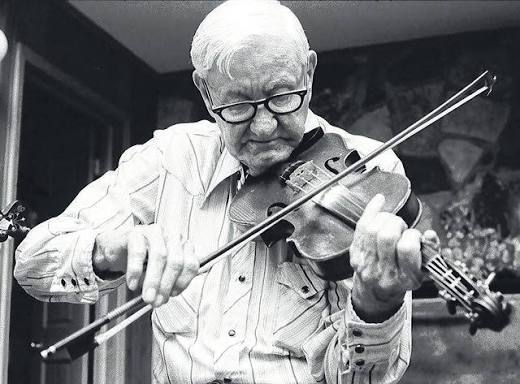

THE LEGENDARY FLOYD RAMSEY

THE APPALACHIAN STRING BAND FESTIVAL “GLUE”

Some say “home” is where your story begins. Down an abandoned road off Route 60 near the ghost town of Winona, WV, sits a humble home near a now defunct coal mine. If you were to step on the porch of this house and politely knock, you surely would be welcomed in.

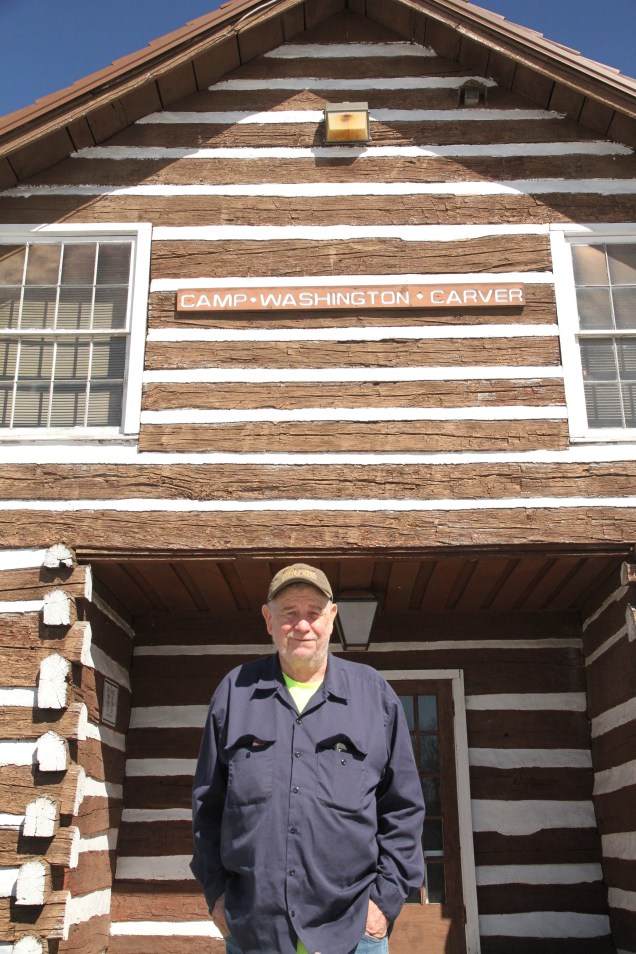
Once inside the main room of the small frame house, built during the glory days of West Virginia mining, you would find a smiling older man standing under the mounted head of an enormous buck deer with antlers taking up much of the rooms ceiling space. The amazing thing about this mounted buck is that each and every spike of those antlers is draped with a hat or t-shirt. Each of these adornments displays a different year’s logo and commemorations of the Appalachian String Band Festival held annually since 1989 at nearby Camp Washington Carver, in Babcock State Park.

Should you engage the owner of this display, you would quickly learn that you are not dealing with an ordinary mountain dweller, but the unofficial “Mayor” of the annual gathering of musicians from around the world known affectionately as “Clifftop,” and that this man takes that moniker very seriously.

You would also learn that each of those garments has a revealing story behind it, which will be related to you by a master Appalachian storyteller who, since 1992, has dedicated his many skills and his deep love of people to the musical community of two to four thousand who gather for nearly two weeks each summer to play the music of the mountains.

Although Floyd Ramsey retired several years ago from his official job, the real exact title of which is always in dispute, he can’t stop spending his year preparing for and greeting the thousands of travelers who come from around the region and across the world to participate in the West Virginia Department of Arts, Culture, and History’s Appalachian String Band Music Festival each year.

Over the years Floyd’s job has been referred to by others and West Virginia’s State website as Camp Washington Carver’s “Assistant to the Director,” “Head of Maintenance,” “Building Laborer.” If you ask Floyd himself, the answer is succinct, “maintenance,” he drawls. Most String Band campers would disagree. They respond with descriptions like “rattlesnake wrangler,” “that guy who blows the whistle,” “fix it guy,” “dispute settler,” “that guy who pulls campers out of the mud,” and many more practical titles. In the end, perhaps longtime Clifftop camper and musician Rob Coulter, from rural Craig County Virginia, puts it best, “Floyd is the glue that holds Clifftop together.”

Floyd has done all these things and much more. Born in Winona, “Up on top of Flannigan mountain,” as he puts it, he has lived in Fayette County about six or seven miles from Camp, his entire 70 years. His partner and girlfriend, Jessie, have been together more than 40 years. Together they have raised three boys and been active in the area’s community life. “She told me she didn’t want to ever get married,” said Floyd, “because she was afraid the good thing we have might change.”


Before joining the staff at Camp Washington Carver, Floyd held a variety of jobs locally and for the state. In the 1970’s when the area coal mines were in full operation, he even worked for a year as a coal miner. One of his jobs for the state that he is most proud of is helping to build the Glade Creek Grist Mill in Babcock State Park that Washington-Carver is a part of. Set on top of a boulder strewn stream, the mill is a working replica of Cooper’s Mill that was once located nearby, according to West Virginia Park Service. The mill was pieced together with original parts that were collected from much older mill ruins in the area. Floyd and his coworkers constructed the mill in 1976, and since then it has become the most photographed mill in the U.S and is famous around the world.

“I didn’t know nothing about the festival when I got hired here,” said Floyd, “They just told me it was a music festival. Floyd told his superiors before coming to work at Camp Washington Carver that if he didn’t like what was going on, he wanted to work somewhere else. That never happened.

“From the minute I came here, I loved this old Camp,” Floyd explains, “And then I met the people. I’ve never met better people than the folks who come to camp and play music here,” said Floyd.

Taking care of Camp Washington Carver and getting it ready for the influx of campers each summer has to be a daunting task. Built in the late 1930’s and early ‘40’s, the camp initially served as the state’s first state-wide camp for African American 4H members. It’s cabin-like structures and 90 year old infrastructure requires constant attention. Floyd and his coworkers spend weeks each summer preparing the buildings and grounds for the strain of thousands of musicians using the facility for more than two weeks in late July and August.

Named for West Virginians Booker T. Washington (who worked in the local coal mines) and George Washington Carver, the camp boasts the largest log structure of its kind in the world, Great Chestnut Lodge. It is used for several events throughout each summer including camps, reunions and weddings and is featured on the National Park Service’s African American Heritage Trail, but the String Band Festival is by far its heaviest use.

Each summer Floyd and others mow, groom, and meticulously prepare the large camping grounds by clearing downed trees and limbs, filling in potholes, dealing with rain damage and flooding in the legendary “bottoms” and attempt to relocate snakes, bears, bees, wasps and other wildlife that might not be good camping companions. Then the campers arrive.

One of the discerning features of the camp that has become an icon to participants is the camp’s water tower, located on the highest point on the camp grounds known affectionately to attendees as “Geezer Hill,” named for the propensity of older campers to congregate their campsites there.
Most people assume that the limited water supply comes from that tower, but in reality providing flush toilets, sinks and showers for attendees is much more complex.

“The water is pumped up the mountain from a well that is a mile and a half away, treated, and then held in large underground storage tanks,” said Floyd. “It’s always a battle,” keeping enough water flowing for the number of people we have.” Accordingly, Floyd and the staff have to regulate shower hours and restrict the use of water at times.

Beyond water management and groundskeeping duties, maybe Floyd’s greatest skill is in helping to manage camper behavior. Putting thousands of musicians, their friends and families together for two weeks can create some chaos and require some minimal rule enforcement and that duty has also been part Floyd’s duties.

“When we first met Floyd, back in the first years, we realized he had the ability to help people follow rules without causing too much commotion,” said the festival’s co-founder, musician and original camp host, Will Carter. One of the early Directors decided that each camping area should be clearly laid out, with strict boundaries. He set Floyd to chalking off camping areas and numbering each one. Will didn’t like the idea and argued that “if we treat these folks as adults, they’ll work it out and respect one another.” Floyd whole heartedly agreed and set about erasing all of the boundaries.

Consequently, a broad patchwork of musical communities have evolved. From the top of “Geezer Hill,” to the youthful “bottoms” you’ll find camping clusters of like-minded musicians, gathered by genre, i.e., “Cajun Land,” geography, “Charlottesville” or just silliness, “Moose Camp.” Over the years, Floyd has managed to study, understand, and have friends in each of the more than 50 separate camping communities that have formed, evolved and grown.

That community knowledge has proved invaluable to some campers. One year a young man that everyone knew as just “Fiddler” came to Floyd looking for water and Floyd helped him fill some large jugs and hauled him and the jugs backed to his camp. Later in the week, Floyd was contacted by staff who had received a phone call for someone among the three thousand campers known as “Fiddler.” The caller said that his mother had passed away and they needed him to come home. Astonishingly, Floyd knew exactly where to find him and delivered the important message and was able to pass it along in time for “Fiddler” to make the funeral..

Something that makes Floyd’s referee duties easier, is that for the most part, each group tends to solve its own problems without involving staff. “I remember one year a group had a rough character who was causing problems, and before that day was over I saw them drive that man to the entrance and tell him not to come back,” recalled Floyd, “That’s the way it usually works, they just take care of it.”

.If you asked Floyd about the hardest part of his job over the years he is quite clear. “We’ve had two deaths here,” he’ll tell you, “That’s hard on all of us.” The camp has medical staff, but maneuvering ambulances and responders into the intricate web of campers and dealing with protocols can take hours and weighs heavily on Floyd and the rest of the staff.

Legend has it that Floyd has used whistles, loud airhorns, shutting off lights and lanterns and a variety of other methods to shut down late night jams and dances that have gone on just too long.
In addition, Floyd’s skills as a rattlesnake and bear wrangler have also become part of Clifftop’s lore. The biggest snake that Floyd recalls he had to remove from a camper’s area was a six foot Timber Rattler. Using a snake handling tool, he wrestles the snakes he relocates into gallon buckets with plexiglass tops because so many of the campers from far away are curious. One can find many photos and videos of Floyd’s snake removal on YouTube.

“The music vibrates the ground,” said Floyd, “And the rattlers are attracted to the vibrations.” Thus, even the camp’s wildlife are drawn to Appalachian string band music.

One camper recalled asking Floyd what happens to the snakes he caught. “Well, I can’t kill them, because they are protected,” answered Floyd. Then a familiar twinkle, known to hundreds of campers overtook Floyd’s face as he lied, “I just cut off the rattles and then they can’t bite anybody!” More than a few gullible campers have succumbed to the mountain man’s sense of humor.

Floyd’s role as rule enforcer is clearly balanced against his deep caring for people. He has hauled hundreds of stuck campers out of mud, helped parents find lost children, comforted folks not used to the mountains’ furious storms, removed bears from under campers and settled disputes between camp sites, all with very little expectation except the friendship of the folks he’s helped. Roy Clark, Jr., son of the famous Hee Haw start, for example, was totally stuck one year and told Floyd, “If you can’t get it out with the tractor, just open the windows and let the squirrels move in.” When Floyd got him unstuck Mr. Clark tried to give him money. When Floyd refused, he offered a CD he had recorded instead. “I’ll take that,” said Floyd. In Floyd’s home you’ll find a large stack of old time CDs, right next to the T-Shirts and ballcaps hanging off the buck representing a lot of hard work and a lot of friendships.

With more than 20 years of service to Camp Washington Carver, Floyd retired from the State of West Virginia in 2019 with one condition, that the State would let him come back and work at the String Band Festival every year. 2025 is his sixth post-retirement year greeting Clifftopers, telling stories and helping thousands of musicians have the experience of their lives..

“He has become legendary,” said Will Carter, “Just one name, like Bono, or Madonna, or Elvis.”
Bands have been named after him in Rhode Island and songs have been written about him in Baltimore. One camper from New Hampshire recounted that among younger campers in the “bottoms” stories and cautionary tales are told late at night about Floyd’s antics, passing on tales about rattlesnakes, bears, and rule enforcement..

One thing is for certain. Floyd and The Appalachian String Band Festival at Camp Washington Carver are synonymous. He has become not only the glue that holds the festival together, but part of the folklore that makes the festival beloved by so many. And now, Floyd is joined on the crew, full time, by his oldest son, Kenny, who is learning the ways of Clifftop and Camp Washington Carver. When Kenny was invited to join Floyd and the crew, he hesitantly asked his dad, “What kind of people are these folks, dad.”

“The best people in the world,” replied Floyd. The tradition and the stories will continue…

A Legacy of Music and Family: Uncle Norm

(Photo by Mark V. Sanderford)

A wise family therapist once observed that families who can tell family stories and laugh together are healthy families. Well, if that’s the case, the descendants of Norman (“Uncle Norm”) Edmonds are beyond healthy, they’re well.  On a misty early fall evening shortly before Hurricane Helene would wreak havoc on SW Virginia, laughter and stories rocked the rafters of the Laurel Fork Community Center.  Gathered together at my invitation were Norm Edmond’s granddaughters Crystal Goad, Brenda Meares, Rita Goad Biggs, and Rhonda Anderson; grandson Ronald Sawyers; and Jennifer Bunn, Norman’s great granddaughter. They were there to share their collective memories of the legendary SW Virginia fiddler affectionately known to everyone as “Uncle Norm.”

It was late September of 2024 and in just a week I was going to host a gathering of musicians on my farm near Laurel Fork and close to where Uncle Norm had lived to celebrate his life and music.  The weekend gathering was to include lots of music and community as well as presentations from musicians and family members.  Then, just a day before the gathering all Hell broke loose as we endured the very tip of Helene’s wrath. The celebration was cancelled for now, but the stories and laughter of the Edmonds family linger.

Learning to Play

Uncle Norm, whose mischievousness was well known, probably would have relished the thought of a hurricane disrupting our celebration.  Born in 1889, to Scots Irish parents who had immigrated to Virginia, Norm was one of four brothers, all of whom took after their father who was a lover of music and a fiddle player. Norman was born in Wythe County, just past the Carroll County line, nine miles from Hillsville in the small community of Patterson.  All that remains today of Patterson is a small community center and the 200 year old building that currently houses Carpenter’s Grocery. At the time of Norman’s birth, it had been settled by many immigrants, mostly from Germany, which may explain why Norman’s father spoke German well and Norman knew enough German to later tease his grandchildren with. 

His father, John Edmonds, played a homemade gourd fiddle, and from an early age, Norm, the youngest brother, wanted more than anything to learn to play that fiddle.  He was so taken with hearing his father and brothers play music that he would do nearly anything to learn. He had the craving and it wasn’t going away. At about the age of five, Norm would wait until his father and older brothers had gone out to work in the fields and then sneak into the closet where the precious fiddle was kept and, carefully imitating everything his father had done, try to scratch out a tune.  It didn’t take long for Norm, who like his brothers seemed genetically disposed to musical ability, was playing many of his father’s civil war era fiddle tunes, having kept them in his head.  His fingers seemed to fly up and down the neck and he soon mastered the complexities of bowing just by experimentation.

One evening, as the family was gathered in the small parlor of the house, John Edmonds asked his youngest son if he wanted to learn to play and handed him the old gourd fiddle. According to the family, every jaw in the room dropped as young Norman begin to play his father’s repertoire, note for note.  It seems that this sneaking about to learn to play is some sort of family tradition among the Edmonds, as two of Norm’s grand-daughters and a great granddaughter related how they had snuck to family instruments and picked them up while their parents weren’t looking.  In great granddaughter Jennifer Bunn’s case, it was Uncle Norm’s very fiddle that she snuck out to play and now, years later she plays it regularly. The room at the Laurel Fork shook with laughter and acknowledgement as each of the women disclosed their mischief.

 The tunes that the older Edmonds played and taught represented the tunes he had learned from his father, Uncle Norm’s great grandfather, but were now “appalachianized” by the influence of local styles and tunes that his neighbors played and the melodies that made the rounds during the Civil War.  As young Norman’s fiddling developed, his tune list reflected nearly 200 years of Appalachian music and like other fiddlers of the region at the time (Tommy Jarrell of Mt. Airy, NC; Henry Reed over in The Narrows, VA; Fulton Myers of Five Forks, VA: and a host of fiddlers in Galax) brought pre-civil war tunes back into the local fiddle repertoire. Norman’s capacity for learning and keeping tunes solely by ear seemed remarkable. Among the tunes young Norman learned from his father were “Walking in the Parlor” (He reportedly loved to play it while Norm’s mother, would be making breakfast for the family and he’d sing it to her “Walking in the parlor/walking in the shade, Walking in the Parlor with a pretty little maid.”

            Other tunes that came from Norm’s father John included “Old Aunt Nancy,” “Lucy Neil,” “Ship in the Clouds,” and one of John’s favorites “Hawks and Eagles.”  It is speculated that “Hawks and Eagles” was actually a Wythe County tune, passed along in the mid 1800’s.  John and later Norman would sing words to it, too: 

            “Hawks and Eagles, going to the mountain,

            Hawks and Eagles going to the mountain.

            Hawks and Eagles going to the mountain-

            Boys and girls, you better get away.”

John had learned tunes from his father as well as other musicians in Virginia. His earliest fiddle was a cornstalk fiddle, a tradition he taught his children how to make. “You could get a lot noise out of those things,” remarked one of Norman’s sons. As John and his four sons held regular sessions and at least one of Norm’s brothers also played the fiddle, Norman began to clawhammer the banjo and soon became adept at playing it both with his family and other local fiddlers.  Norm also taught himself the guitar and the pump organ, so he could play in a variety of situations.

            In 1917, at the age of 28, Norman fell in love with Fedella, a beautiful ballad singer who was 16, and they were married and moved to the Willis, VA., area. Norman was sort of a “jack of all trades” and subsistence farmed; growing a garden and keeping livestock, but continuing to get out and play music with friends and neighbors.  He and Fedella (often known as “Dean”)were also raising a family of nine children, including six boys and three girls.  They made sure that each of their children appreciated music. Playing with their father or singing with their mother and learning to dance was part of the family’s heritage to be preserved and passed on.

Norman and Fedella (or “Dean”)in their later years. (Photo by Mark Sanderford)

The Big Bang

 Besides playing music with his family, Uncle Norm continued to seek out local musicians to play with.  One of his favorite banjo players was a man from the Laurel Fork area of Carroll County by the name of J.P. Nester (1876-1967) who most folks referred to as “Pres” after his middle name, Preston. Pres played the mountain clawhammer style of the region and was crisp, clear and powerful in his delivery. He also sang well and learned many of the old tunes of the Galax region.  By day, he would operate the Hillsville telephone switchboard, and then hike out into the Blue Ridge at least seven miles, to where Uncle Norm was living, and play until midnight.  The two became good friends and were in demand.  Their style, according to many folklorists such as Charles Wolfe, represented the original fiddle/banjo duet style of the Blue Ridge well.  They were asked to play for house parties, school dances and pie suppers around the area.  

            Reportedly, it was very hard to get Pres to travel out of the area.  He didn’t much care for automobiles or trains and preferred the confines of Carroll County, where he could walk without much bother.  After playing regularly for a furniture store owner in Hillsville, a once in a lifetime opportunity came along.  The furniture man had been approached by an RCA executive from New York, who was setting up a field recording studio in Bristol, TN., 100 miles from Hillsville.With much coaxing, Norm convinced Pres it was worth the money and travel to go down and be recorded by the RCA representative, whose name was Ralph Peer.

In August of 1927, A.P Nester (Nestor) and Norman Edmonds recorded four sides at what is now know as “the Big Bang of Country Music” or simply the “Big Bang.” Among the other musical “discoveries” Peer made during those sessions were soon to become legendary figures in early country music, including The Carter Family, Jimmy Rodgers, The Shelor Family, Blind Alfred Reed, Henry Whitter and a host of others.  Uncle Norm’s name was not highlighted on the recordings.  They were simply listed as “A.P. Nestor (sic.)” The two musicians recorded four sides for Peer.  Two of the recordings were released by RCA later that year: “Train on the Island” and “Black-Eyed Susie.”  Norman’s fiddle soars above Pres’s powerful banjo on both cuts forming a nearly perfect example of early string band music from the Blue Ridge.

Two other sides the duo recorded mysteriously disappeared in transit to Peer’s New York office. “John My Lover” and “Georgia,” would never be heard, and purportedly the two remaining tracks would be the only recordings we have of Pres Nester’s playing.  To add some insult to the event, Peer misspelled Pres’s last name (“Nestor”) and subsequently every re-release and nearly every historical account of the collaboration between Norman and Pres Nester has wrongfully attributed his playing and singing to “J.P. Nestor.”  His and Norman’s rendition of “Train on the Island” remains one of the best examples of old time string band music and has been included in countless anthologies of music and dissertations about the music.  When self-proclaimed folklorist Harry Smith released his “Anthology of American Folk Music” years later, he included the tune and the misspelling of Pres’s name.  To this day, nearly 100 years later, there are hard feelings in the local area about the misspelling. 

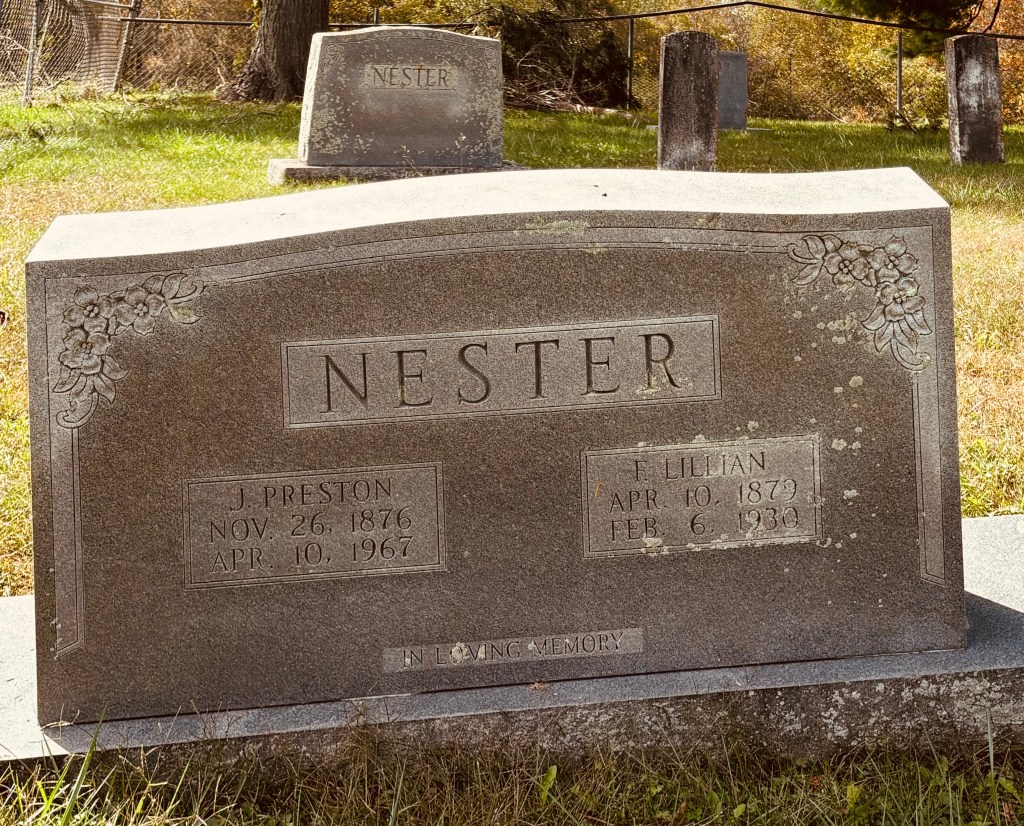
J. Preston (Pres) Nester’s grave marker in Cruise Cemetery near Laurel Fork. Correctly spelled.

Currently there are no other “Nestors” in this geographic area, but there is a large population of Nesters.  One often told local story recalls that in the early part of the last century an itinerant preacher told the Nester family members that “Nester” had uncouth connotations and they should change their names to the more stately “Nestor.”  According to the tale, all of the families that changed their names to Nestor were shunned locally and eventually they relocated to the mountains of West Virginia where the name has flourished.  In any account, the lone grave of John Preston Nester, banjo player extraordinaire, rests beautifully on a mountain near Laurel Fork, VA., in a small cematry overlooking the valley of the Big Reed Island Creek, with the correct spelling of his name.  Recently, the Museum of the Birthplace of Country Music in Bristol, that is dedicated to preserving the importance of Peer’s recording sessions, has made an attempt to right the wrong done to Pres’s legacy by correcting the spelling in their exhibits and displays.

The Music House

When Uncle Norm moved his family to a home closer to Hillsville, just off Rt. 58, the importance of passing on his musical heritage became a priority for him.  With his family’s help he built a one room outbuilding, specifically for family gatherings to play music. They constructed the music house out of cinder blocks, carefully filling each block with straw to add “soundproofing” for both the walls and wooden floor.  Uncle Norm wanted to be able to practice and record his music here.  Uncle Norm supported his family by doing a variety of jobs including working on the railroad, working at sawmills, building furniture, gardening, playing music and piecemeal work where ever he could find it.  On one trip to Indiana, he bought a pump organ and brought it back to the Blue Ridge only to find it was too big for most of the house, except in the bedroom, where it landed and stayed. He would play hymns on it while the family sang from the bed and the hallway outside.

As his children aged and started their own families, it became a tradition for the local family to gather for music on Sundays before church.  They would gather in a circle of chairs at 7:30 and play for two hours solid, before joining in a huge breakfast, finished just in time to make it to the 10:00 Presbyterian Church service down the road.  His grandchildren all remember these Sunday rehersals as jubilant gatherings with Uncle Norm leading the family in tunes and songs, usually with his small dog, Penney, seated on his lap and looking longingly into Uncle Norm’s beard. Here he and his boys and sometimes grandchildren, played while some of the daughters danced and his wife set the large table in the music house with a Sunday feast.

Rufus “Berry” Quesinberry, Uncle Norm, and Paul Edmonds (photo by Alan Lomax)

In the 1950s, a local banjo player named Rufus Quesinberry began to join the family for Sunday practice and became Uncle Norm’s go-to accompanist, along with various configurations of his sons, often including Paul, John, and Cecil on guitars and Nelson on bass. He aptly named this mostly family band, with rotating banjo players, “The Old Timers.” About 1955, Uncle Norm was requested to play for 15 minutes every Saturday morning on a local radio station while the studio announcer shared local grain and hog markets. Norman’s son, Rush, dutifully collected these shows on tape, and they later became the basis for two volumes of recordings released in 2015 by the Field Recorder’s Collective (FRC 301 and 302, 2015). The pleasant banter between the announcer and Uncle Norm makes for great listening, as does Uncle Norm’s playing. The show continued until 1970, when Norm, at the age of 81, hung up his fiddle.

During his 60s and 70s, Uncle Norm’s music career thrived with performances at various fiddler’s gatherings, contests, local dances, and social parties. The onset of the “great folk scare,” brought on by the release of the Harry Smith Anthology of American Folk Music, kept interest in Uncle Norm alive among students of Old Time music, and many traveled to hear him play and learn from his vast repertoire of fiddle tunes. One such “folkie” was the great folklorist and field recorder from the Smithsonian, Alan Lomax, who came to Hillsville and recorded Uncle Norm and the Old Timers in August of 1959. He recorded a variety of tunes including “Sally Anne,” “Lonesome Dove,” “Walking in the Parlor,” “Salt River,” “Greasy String,” “Breaking Up Christmas,” and “Bonaparte’s Retreat.” The Old Timers that day consisted of Norman, son Paul on guitar, and Rufus Quesinberry on banjo. (These recordings are accessible at https://archive.culturalequity.org/solr-search/content/list?search_api_fulltext=Norman%20Edmonds)

Lomax’s interest in Norman and the subsequent release of some of the recordings he made brought young people flocking to his door and found his Sunday sessions and breakfast often joined by strangers from as far away as Ireland and England as well as tune seekers from up and down the East Coast. Norm and his family welcomed all comers and he was excited to pass his musical heritage on to a new generation of players.

Although Norm and The Old Timers often played at the famous Galax Old Fiddler’s Gathering, Norm never placed in the individual fiddle contest, but he and The Old Timers placed fourth in the 1964 old-time band contest.In 1970, Uncle Norm was an honored guest at the Galax festival and was asked to play on stage. With a great sense of tongue-in-cheek, he boomed out a version of “Monkey on a String,” and the 81-year-old fiddler brought the crowd to its feet. It was his last public performance.

Legacy

(Photo by Mark V. Sanderford)

As Norman and Fedella moved into their later years, their kids worried about them being so far from town with so much to manage and they built a small comfortable cabin for the folks to live out their remaining days, closer to Hillsville. Uncle Norm passed away in November of 1976. He was 86 years old.  Fedella Edmonds lived on until 1992. She died at the age of 92. When I asked the gathered grandchildren and great granddaughter of Uncle Norm what they thought music meant to him, they were unanimous in their response.  “Family legacy,” they all agreed. 

Much of Norm and Fedella’s later lives involved being active in the lives of their children and especially their grandchildren. All of them remember the music and the gentle teasing their grandpa would give them. Often he would blurt something out in German to startle them or tell a joke and make them laugh. They sometimes would get him back. For example, Norm would hide his “hooch” on top of the refrigerator and sneak it out to the music house to take a snort now and then, being careful not to let the grandkids see it. When the bottle got lower and lower, Uncle Norm, who wasn’t a steady drinker, could not figure out what had happened. He never suspected that his granddaughters were climbing up on chairs to get the bottle and pour some out whenever he wasn’t looking. It was evident that the Edmonds house was filled with love, music, and a deep respect for family and legacy.

 Besides the tapes from The Oldtimer’s radio show, preserved by the Field Recorders Collective, only one other album of Norm’s music survives. In 1973, Davis Unlimited Records released “Train on the Island: Traditional Blue Ridge Mountain Fiddle Music.”  On the album, Norm and banjoist Rufus Burnett recorded in the classic fiddle/banjo style of the region. Included are newer versions of the two songs that launched Norm’s career; “Train on the Island,” and “Black Eyed Susie,” as well as tunes that Norm has become well known for such as “Ship in the Clouds,” “Lucy Neil,” and his unique version of “Hawks and Eagles.” In the 1990’s due to demand the album was rereleased on CD.

 Tragically, in 1998, Uncle Norm’s son, Lewis “Rush” Edmonds died in a house fire.  Rush, who had a keen interest in recording technology had recorded years of radio shows and years of family gatherings in the music house that Norm had built and those years of tapes went with him.  No other recordings of Norman Edmonds and his beloved Old Timers exist.

Norm’s family legacy carries on among his grandchildren and great grandchildren. Nearly every one of them plays some type of instrument or has a deep appreciation for the music of the mountains.  Nelson Edmonds, for example, was one of Norm’s sons that everyone called, “Harry.”  Harry not only played a variety of instruments but built guitars and fiddles also.  He encouraged his son, aged 5, to sit down next to his Grandpa and learn how to move the sticks like grandpa played the fiddle. After that, he rarely got to play with his cousins at family gatherings because his dad wanted him to fiddle.  

Soon, Jimmy was playing so well that he became a fixture at the family gatherings in the music house.  By the age of 10, Jimmy was not only playing with his grandpa, but would accompany legendary banjoist Wade Ward on stage as part of the legendary Buck Mountain band from Independence.  Jimmy carried the family legacy of music on to win the fiddle category at Galax and many other contests, become a sought after multi-instrumentalist, a producer of the Carolina Opry, and the builder of over 300 high end acoustic guitars. Jimmy also played a fine clawhammer banjo style that he learned from Wade Ward, and one year at Galax took first place in front of Wade who placed second.

            Another granddaughter of Uncle Norm’s, Barbara Poole (1950-2008), Jimmy’s sister, learned to play the bass, the mountain dulcimer and to sing. She started her career as a child playing with her brother in the Buck Mountain Band, and later went on to have a career in old time music playing with the likes of Whit Sizemore and the Shady Mountain Ramblers, Richard Bowman and the Slate Mountain Ramblers, banjoist and singer Larry Sigmon, The Toast String Ticklers that included Vernon Clifton, The Grayson Highland Band and others.  The family legacy stayed and stays well alive.

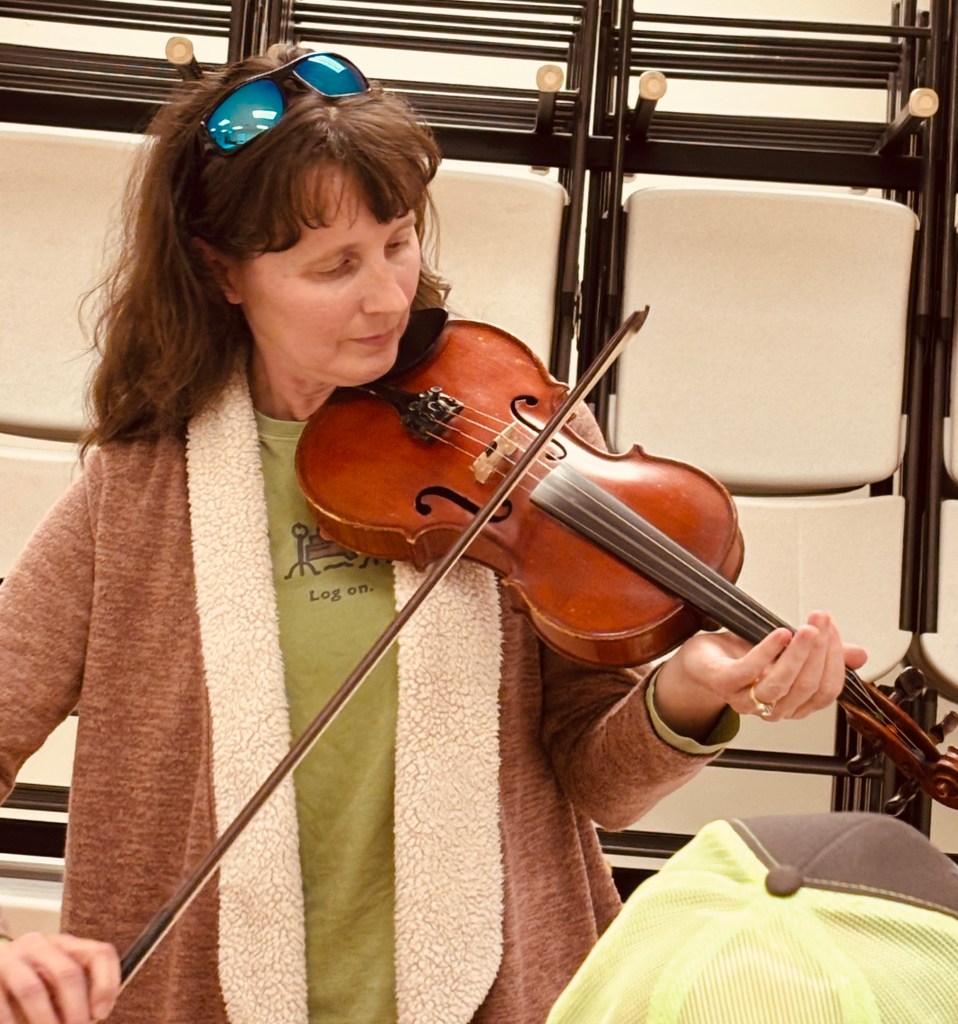
Jennifer Bunn, Uncle Norm’s great granddaughter plays his fiddle         

Today, Jimmy Edmonds still builds guitars and occasionally can be heard making one of his grandpa’s fiddles sing. Uncle Norm’s great granddaughter, Jennifer Bunn, also has one of Uncle Norm’s fiddles and plays it every chance she gets, having recorded a bluegrass CD and continues to make music in the Presbyterian Church in Hillsville that her great grandparents attended.

            Next Fall, we will once again try to gather the scattered Edmonds descendants and Old Time Music fans from across the nation in my back pasture to celebrate the incredible life and legacy of Uncle Norm Edmonds. We will have folklorists, musicians and family members pay tribute to a life and legacy of old time music here in the Blue Ridge. Whatever happens, I know it will be a legacy of music and laughter.

References Used in this Article:

Bekof, J., (2012) J.P. Nester and Norman Edmonds,Old Time Party Blog, retrieved from:https://oldtimeparty.wordpress.com/2012/04/24/j-p-nestor-and-norman-edmond

Donleavy, K., (2004) Strings of Life: Conversations with Old Time Musicians from Virginia and North Carolina, Pocahontas Press, Blacksburg, VA.

Field Recorders Collective, (2015)  Uncle Norm Edmond and the Old Timers,, Vols 1 and 2, (2015) 301 and 302, available at: https://fieldrecorder.bandcamp.com/album/frc-301-norman-edmonds-the-old-timers-vol-1-andy-cahan-collection

Smith, M. (2024) Personal Interview with Descendants of Norman Edmonds, September 14.

Wolfe, C.K. & Olsen, T. (Eds) (2005), The Bristol Sessions: Writings About the Big Bang of Country Music, McFarland Press, West Jefferson, NC.

Nobody’s Business

A PR piece for one of my favorite local bands

Malcolm Smith

Every once in a while an old time string band becomes the go to dance and entertainment band up on the Blue Ridge. It has happened with such bands as the Dry Hill Draggers, The Cabin Creek Boys, The Whitetop Mountain Band, The Konnarock Critters, the Slate Mountain Band and so on. The latest band attracting hordes of dancers and an army of loyal listeners up in the highlands of Virginia and North Carolina is “Nobody’s Business’

The band’s driving sound is derived both from the genetic rhythm created by master musicians but also from a genuine love of old time and early blue grass music. All of the members of this band trace roots to the Grayson Highlands area of Virginia as well as North Carolina high country. But what really makes “Nobody’s Business” stand out is that the musician’s lives are deeply dedicated to the art of old time mountain music and traditions in many other ways.

Take guitar player and “high lonesome” vocalist, Jackson Cunningham for example. When Jackson is not studying the various guitar styles and perfecting the vocalizations of the region, he is building some of the finest guitars on the planet. Cunningham Stringed Instruments is selling handmade guitars made in Mouth of Wilson, VA. around the world to those seeking an authentic old country sound.

Fiddler and vocalist Trevor McKenzie is a professional music archivist, author, and Director of the Appalachian Studies Center at Appalachian State University. A former apprentice of the great mountain fiddler and banjo player, Paul Brown, Trevor is immersed in Appalachian musical traditions. His most recent book, “Otto Wood: The Outlaw” details the life of an Appalachian bandit who was made famous by a ballad sung by, among others, Doc Watson

Corbin Hayslett, the banjoist, is considered to be a master of a variety of Appalachian and Blue Ridge banjo styles and can adapt his playing to both old time and early blue grass. Besides his playing, Corbin promotes his knowledge and love of mountain music by serving as General Manager of County Sales, the only music store in the nation devoted solely to old time and bluegrass music. In addition, Corbin serves as a mentor and teacher at the renowned Handmade Music School in Floyd, VA.

Joined by Jesse Morris on bass, the band defies both gravity and tradition, shifting from powerful old time fiddle dance tunes to crooning early bluegrass harmonies while putting on a darn good show.

Currently they are all the rage up here on the Blue Ridge, because fans are crazy about the drive, the authenticity, the fun and the madness that is “Nobody’s Business”

Nobody’s Business: L to R: Jesse Morris, Trevor McKenzie, Jackson Cunningham, Corbin Hayslett