I was deep in a hollow across the state line in West Virginia, sitting knee to knee with some of the best old time musicians I’d ever met. My banjo was ringing with dark, ancient melodious sounds. Somehow, by the grace of god, I was keeping up as we travelled the twisty, curvy, crooked melodies that have been played in hollers such as this for a couple of hundred years. The modal tune we were playing was coming to an end and I wanted to put my indelible mark on it. Pure vanity. Then I did it. Right as the six or so pickers; fiddlers, guitarists, and the bass player, ended in complete synchrony on the perfect lonesome note, my hands could not be stopped as they plucked out a modal sounding ”shave and a haircut, two bits.”
Nailed it. Well, killed it might be a better way to put it. Everyone in our tightknit circle just stared at me. The disdainful silence was painful. I had ruined what was otherwise a perfect jam tune. I put a trite ending on a masterpiece, therefore trashing the otherwise perfect tune for just about everyone.
I do have a defense for my behavior, however. Geography, pure and simple. See, up on the Blue Ridge in Carroll County, VA. where I live and spend most of my life as a professional jam attender, we tag everything. We have single tags, double tags and even triple tags. Sometimes even waltzes get a few notes of tag. It’s the way of the music in my home region. Definitely not the way of the jam in West Virginia or, as it turns out many other places old time music is shared.
This moment of major embarrassment started me thinking, as major screwups tend to do in my life, “What the hell is the deal on tags?” When is it OK to use them? What type of tag is right for what type of tune, and how the hell do you decide? And, how does geography, culture, history, and the fiddler’s personality have to do with how you end a damn old time tune? Most importantly, I wondered how I could keep from the receiving a deadly silence and cutting stares of disapproval when I’m ending a tune outside of the Blue Ridge.
So, I did what I do best. I started asking a lot of questions. For the past several months, I’ve been interrupting jams all over the place by steering the discussion towards endings, tags, physical signals among musicians and, in general, being a folkloric pest. Soon, at old time music jams all over the region, people stopped making eye contact with me for fear of my asking them about tags.
The results of these queries were varied and sometimes a little scary (no one likes a long talker in an old time jam, even though it’s supposed to be about community) but what I mostly learned is that there absolutely is no hard and fast rule about how to stop an old time tune – it’s mostly left up to the fiddler, and they are not an easy bunch of people, in general to pin down.
After hours of “jam interruptus,” I developed a somewhat cohesive list of responses to my first question:
What is the purpose of an audible tag ending in old time music?
Basically, my respondents came up with these rationalizations for providing a tag on an old time tune:
First, of course, was the most obvious. The tag ending serves to alert other musicians that the tune is over. In a jam situation, this is usually preceded by someone kicking up a leg from their chair in the circle, a fiddler grunting “yup,” “last time,” “here we go,” or some other audible grunt. It takes the average old time musician at least two types of communication to snap out of their drooling, eyes rolled to the back of the head trance, and play the ending notes. Still, there is always that one guy or who is too deep in the tune to get the signals and they end up carrying on and looking rather foolish, thus ruining any jamonious harmony. Nearly every old time musician has witnessed a tune die a trainwreck of an ugly death because someone wasn’t paying attention! In other words, the perfect old time jam tune ends with everyone stopping together and a tag, particularly one everyone knows and anticipates makes all the jammers feel like pros.
The second range of responses made a lot of sense to me: Old Time music is all about dancing and a tag of some sort alerts the dancers that the tune is ending and prepare for stopping. As one local fiddler who is also a square dance caller and flatfooter put it, “Tags keep the dancers from crashing and burning.” Enough said. Old time community safety at its best.
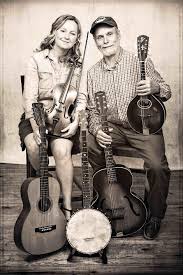
Carroll County, VA, fiddler Erynn Marshall, who moved from her home in Canada to study with regional fiddlers and who, with her husband, Carl Jones, teaches and plays old time music full time, found this connection in SW Virginia to be at first surprising:
“When I encountered tags in my younger years as a fiddle player (like the classic one that matches the rhythm of “shave and a hair-cut – two bits”) I thought they sounded goofy. I didn’t see the value in playing them. However, as I became more immersed in old-time music, learned trad dance, moved to the Blue Ridge where I’ve been most of the last two decades, this opinion changed.
Clearly, ending tags have a purpose especially in a place with living dance traditions. Ending tags let dancers know when a tune will end and you will often hear them at dances, jams with dancers present, clogging team performances and they are always played for dance contests. Ending tags are also commonly played at instrumental jams as well which helps a large group of musicians to end together as well. More experienced fiddlers also play signature ending tags associated with influential fiddlers from the past including: Otis Burris, Benton Flippen and others. By playing these tags today, fiddlers give a respectful nod to older fiddlers of the past creating a continuity of tradition.
Ending tags are very common in SW VA and in the Round Peak region of NC though you will also hear them elsewhere. I think they will always be heard in areas/communities where square-dance and step-dance (flatfoot, buckdance, clogging) traditions are alive and frequent. Ending tags are not used on all tunes here in SW Virginia. There are plenty of moody sounding, slower or non-dance tunes that don’t suit a double tag ending. That said, knowing some good ending tags or being able to improvise one on the spot is as important for a fiddler in the Blue Ridge to know as is being able to kick off a tune with “taters” for a strong start,” said Erynn.,
The third group of responses centered around the ego of the fiddler: Tags are a method for a fiddler to put his/her unique mark on a tune. This is sort of like tagging your gang’s name on a railroad car with graffiti. The fiddler basically puts his trademark ending on the tune so that everyone knows who is the boss of any old time tune. It’s not the guitar, not the bass, and certainly not the banjo. Fiddlers are like that. As one of them told me “It’s how I put my personal ‘stank’ on a tune, sort of like a cat spraying around the house.” Not a metaphor I would have used, but it works. This type of ending is often accompanied by an “I told you so” sort of look on a fiddler’s face.
Fourthly, one of the most popular responses to my question about the purpose of tags is following tradition. A great example is the comment of midwestern fiddler Tricia Spencer (who is a frequent performer at Blue Ridge events.)
“ I have ones that I have learned from the old fiddlers I learned from,” said Tricia, “I might have modified them a bit but I appreciate the nod to the fiddler who I might have borrowed the tag from. My Grandpa had an interesting way to end his tunes and I like to use his. My silly self likes to just use the shave and a haircut,” Tricia told me.
Legendary old time musician, Walt Koken, an original member of the Highwoods String Band, one of the most popular traditional revival bands of the “folk scare” era of the 70’s and 80’s told me this:
“When we first started our journey into old time music, we immersed ourselves in the music of fiddler Arthur Smith,” he said, “Arthur ‘double tagged’ everything. Well, we practiced up and took our band on the road to the Blue Ridge. We found that when we played with musicians in that part of the country, they also tagged it all, so we just followed who we admired,” said Walt.
So, these answers form an old, worn out response often used by members of the academic community. The real answer to the question of why tag a tune in old time communities is “It depends.”
An Array of Signals
The most common way to let folks in a jam know that the tune is ending seems to be a physical lifting of the right or left leg during the last refrain. I’ve seen this done in a variety of ways, from petite and demur foot lifting, to high over the head kicks. This is usually performed by whoever in the hell started the seemingly never-ending tune, but in some jams, particularly up north, members of the group can “veto” the fiddler’s intention by raising both legs with their heels together and toes forming a perfect “V.” This is telling the fiddler that this person of people are not ready to end the tune, no matter how tired and how much foam is coming from the fiddler’s mouth or drool falling from the mouths of banjo players.
Another signal is what I call the “ending grunt.” As most of you know, trying to talk and play the fiddle at the same time can be very hard to execute. So, many fiddlers (sometimes too stocky or too drunk to lift a foot without falling over backwards,) try to call out to everyone that they are ready to stop the tune. I’ve heard “hup,” “last time,” “here we go,” and a variety of guttural sounds come out of fiddlers who seem to be crying for the groups help to end the tune. This noise is purely at the discretion of the fiddler. Tommy Jarrell, the legendary fiddler from North Carolina, would often shout “Let’s catch it this time!,” or another of his favorites: “Let’s roll it over one more time.
Some very astute fiddlers give out musical notice that the tune is ending. It can be a pause during the last time around, a series of quick bow strokes, or a specially concocted phrasing that fits the tune, but alerts the hoards that they end is near. This is a cue often used on stage and becomes a type of dialogue with the rest of the band. Caution. Don’t try this one at your home jam, it could cause total cacophony.
Of course, fiddlers generally have a bag of tricks when it comes to signaling the end is nigh. This signaling can include a head nod, an animated change of body position, a big cheesy smile, or a big arm movement with the bow hand. Those more subtle signals often don’t work in a jam, because there are always those members, who like me, like to enjoy the jam “trance” that old time music is so famous for with their eyes closed. Contemporary old time musician Bruce Molsky once characterized coming out of an old time trance by noting, “Old time tunes don’t end, they land.”
Tunes that signal the Jam itself is ending
In some jam cultures, certain tunes can be a sad signal from the fiddler to the rest of the group that the jam is over and that fiddler might be tired, drunk, or both, or that the venue hosting the jam is ready for the music to stop and it’s time to pack up the instruments. One of the traditions here in SW Virginia comes from fiddler Albert Hash, the founder of the White Top Mountain Band that has been playing for dances for nearly fifty years. Although Albert died in 1983, his influence is still felt. For many years, Albert’s favorite tune was one that came to our mountains by way of Canada.
The tune “Hangman’s Reel” that Albert both popularized and regionalized by creating his own three part version, seems to be a fitting ending to raucous gathering of musicians. It’s wild, fast, and loved by dancers of all types. At places like the Floyd Country Store in Floyd County, VA; The Phipps Store Jam over in the NC Blue Ridge in Ashe County, and at private and campground jams across our region, Albert’s “Hangman’s Reel” let’s everyone know the fun is soon all over.
I’ve been in jams in NC where Tommy Jarrell’s version of “Sally Ann” is always the fiddler’s way of ending the session. It is often referred to as the “Surry County National Anthem” because of its frequent use as a jam ender. It is always played with fire and reverence.
Some performers like to end their stage shows with a particular tune. Ralph Stanley, legendary banjoist for the Clinch Mountain Boys would end every concert he played by playing a clawhammer banjo tune to honor his mother, who taught him to play, by frailing out “Shout Little Lulu,” the first tune his mother, Lucy, taught him.
Deep in the Ozark Mountains in places like Mountain View fiddlers have a tradition of alerting the jam crowd that they are in need of refreshment. When a Missouri Ozark fiddler plays the tune “Dry and Dusty,” someone better get the fiddler a drink and quick, or he or she is on the way out the door. Usually something in a Mason jar or a plastic milk jug appears, magically in the fiddler’s hands. It usually contains a very suspicious smelling clear liquid!
Kentucky fiddle master, John Morgan Salyer a very influential fiddler from Magoffin County, often rode his mule to local gatherings. Salyer was by no means a commercial fiddler, he refused to record commercially because he was afraid to compromise his unique style. When you were in a session with John, you knew it was about to end when he would turn to his mule and famously say, “Giddy-up thar Kate, we can make more money plowin’ than we can playin’ the fiddle!”
“Just a place where ya stop.”
Having lived up in New England for several years (a life event I often regretted), I quickly learned that stoic Northern jams rarely, if ever tag a tune for any reason. They just shut down on the last note and stare threateningly at anyone who doesn’t end with the rest of the bunch. It’s a stoic kind of New England thing. But, understand, except at Contra-Dances, that require a very different kind of playing, jams and performances in the North are much more reverent and esoteric and often involve crooked and unusual tunes that aren’t necessarily rowdy dance tunes or are dance tunes that are played in a non-dance inspired manor. Lots of navel pondering in jams up there!
Down over the mountain I live on, in North Carolina, the Round Peak tradition is one that requires strict adherence to those that played the tune in an earlier era. Learning a tune also means learning how certain fiddlers ended the tune. Tradition is the key ingredient in tagging a Round Peak tune.
Geography and local culture influence the way tunes are ended. In West Virginia, for example, the geography of the mountains means that fiddlers, like the legendary Burl Hammons and his family, lived in hard to get to and out of the way places and fiddling was often more lonesome, solitary and melodic and less about filling a large dance hall. There, where tunes are passed in kitchens and porches, tunes don’t need a driving, rigid ending. They often just trail the tune off on the final note or end on a droning, sustained fiddle chord.
In isolated mountain communities in West Virginia and Kentucky, the original fiddle banjo combination is often preferred to large gatherings. Often there was no need to follow a rigid, eight bar structure. Thus, fiddlers often played what sounded right to them. This birthed a tradition of “crooked” tunes that have extra beats, are missing half-measures or have strange phrasing that isn’t symmetrical. This makes the tune pretty hard to predict where endings are concerned. The tune just ends whenever the hell the melody resolves itself. In these twisty, haunting tunes, often modal, only the fiddler knows where that is.
In flatter places like Kansas, Texas and much of the deep South (Alabama or Mississippi for example) fiddlers often played in larger gatherings in more formalized community square dances. In those regions, tunes had to be “straight,” so the dance callers and their minions could stay in synchrony and folks did fall all over each other trying to figure out what to do with crooked notes or phrasing. In the flatlands, tags and novelty endings rule.
So, here’s what my journey down the rabbit hole of proper tune endings has taken me:
How you end just seems to depend on where you are, who’s playing and who’s interacting with that playing, and, of course on local tradition. In earnest, it seems we should just follow the rule that one of our most remembered and beloved tune leaders often said. When asked how to end a tune, Tommy Jarrell would retort: “Old time tunes don’t have an endin,’” he said, “They just have a place where ya stop.”
It’s a beautiful early spring afternoon in Southwest Virginia and I’m deep in Franklin County. One of the things that everyone seems to know about Franklin County (named for Benjamin Franklin) is that the writer, Sherwood Anderson, once dubbed it “The wettest county in the world.” I am on Boyd land, just off Dry Hill Road. The Boyd’s have owned, farmed, and worked land in this county since the earliest settlers came to Virginia. They have also contributed substantially to its legendary status since the “Great Moonshine Conspiracy” of the early 1930s and to its renown as one of the natural sources of great old time mountain made music in the world.
Jimmy Boyd Teaching a Class on Moonshining at Ferrum College
Jimmy Boyd believes in genetics. “There’s something about us Boyds,” he told me, “that just put rhythm in us. My daddy played all sorts of things,” he remembered, “but when he danced, his body would just come alive, and people would come to watch. There was an old mountain woman that lived in the hills over there and everybody wanted to watch her dance with my daddy.
As I waited near a beautiful pond on the Boyd property, an old battered red flatbed truck approached hauling its capacity in large round hay bales. Out of the driver’s side popped a larger than life mountain man, wearing a well-worn moonshiner’s hat, a flannel shirt draped loosely over a t-shirt from one or the other old time music festivals. He grabbed my hand, momentarily crushing it in his, and smiled a wry smile. Grandchildren climbed in and out of the truck and then his son, Stacy, jumped in and took over Jimmy’s chores while we grabbed chairs down by the pond. For the next two hours I was in the presence of living folk lore: moonshine historian, storyteller, banjoist, band leader, and proud head of the clan, Jimmy Boyd.
Jimmy’s earliest memories of growing up in Franklin County are of two things that have greatly influenced his life. One is of men making shine along the creek banks and hollers and the second is of hearing old time music at corn shuckin’s and parties and in his own home.
“The two have always just seemed to go together, somehow in my life,” said Jimmy. He remembers vividly being carried on his father’s hip down a long winding path to a still way back in the woods near his earliest home and seeing men standing around a still. “The thing I remember the most is the sweet smell of that corn cooking. Back then, those men made it right, little or no sugar, almost all grain. It smelled so good,” exclaimed Jimmy.
The moonshine really came first. Jimmy’s older brother, Billy, who he looked up to, became involved in working with and for the local shiners in his teens. In the post-Prohibition days in Franklin County, there had been so many families involved in the moonshining business (one estimate in the Roanoke Times was that 90% of Franklin County’s population was somehow involved in its shine production and export business in the ‘20s and ‘30s) and so many of the families relied on moonshine for their income, that the tradition was hard to die. Many of the folks from the Moonshine Conspiracy and moonshine makers warring days with law enforcement didn’t have any other source of income and jobs were scarce for those not fighting in WWII. Some of the best moonshine runners from the area became race car drivers. Others like Jimmy and his brother, joined the tradition and learned the trade of Franklin County whiskey production at young ages.
“I was about 12 years old,” recalled Jimmy, “and my brother, Billy was about 8 years older. When he left home at about 16, he didn’t go to the factory, he went down in the holler to make whiskey,” he said, “He got with some old timers who really knew how to make whiskey. He would make good, clean whiskey.”
“He got me going. I made my first real batch when I was 20, soon as I was big enough to haul a 100 pound bag of sugar. But back in those days we didn’t use any sugar on the first run. It was pure grain, no sugar. We would save back the backwash from that first run, the grain and the yeast, add some barley malt and a little sugar and the yeast would go again, and that’d be our second run, the first sugar,” Jimmy continued, “You could do that four times. Cornmeal and barley malt, and sometimes dry meal.” He continued, “That made the best whiskey. Some folks around here now just make sugar whiskey, that is awful stuff and not good for you,” said Jimmy. “Some people would want that first all-grain run, some preferred the first sugar. It was all good,” he laughed.
He remembered the thrill of heading down to the first barrel of corn mash that he fermented. “It was the springtime, like this,” Jimmy recalled, “You start up that holler to that still and you can smell it fermentin’ and that smell gets mixed with the honeysuckle smells and those flowers, that’s fun,” he smiled. “We enjoyed our work. A lot of that moonshine we made didn’t stay around here. A lot of it was headed up to the city folk up north,” said Jimmy.
There was an organization of labor involved in the process. “At first, I was just the labor at the still site,” he told me. “It was my job to help make the moonshine, ferment the mash and then cook it,” Jimmy said. “Most of the time you had your distillers and then you had someone around who did your furnishings. A fellow that done your furnishings, he would bring you your grain, and when you were done, he would pick up the whiskey and he would distribute it.”
Stacy Boyd, Jimmy’s oldest son, remembers being a small child when his father was making whiskey at a still site on the other side of a ridge near their home. “Our job, when Daddy was shining and we were playing in the yard, was to watch the cars going up the only road near our house,” Stacy said. “We were supposed to count how many people were in the car when it went up the road, and then count how many were in it when it came back down. If there was less people in that car, we had to run over the ridge and tell Daddy, because it was probably a revenue agent being dropped off to find the still.”
Over the years, Jimmy has had his share of run-ins with local law enforcement and has spent an accumulation of nearly a year of jail time for his hobby. “We had to be real careful, back in those days,” Jimmy said, “A lot of times my wife wouldn’t even know where I was working at. Sometimes the people paying us wouldn’t know.”
Watch a short video about Moonshining in Franklin County HERE
The life of a moonshiner in Franklin county had lots of risks. Jimmy recalled getting caught and spending time in city and county jails. “I had been pulling three months and some days in the Rocky Mount jail,” he said, “And the old sheriff, he took a likin’ to us because moonshiners are good people overall. They’ll pay you every cent they owe you and they are just as honest as days are long. Most of ‘em are. Every now and then you’ll get someone who wants to turn the next fella in to get some money, you know.”
Jimmy continued his story, “Well, that old sheriff at Rocky Mount, he took a likin’ to us, you know. We had a year to pull and he made a trustee out of me and then said, ‘Boys, how would you all like to go home?’ Well, that sounded good to me! So, he said, ‘I’ll tell you what, if you paint my jail inside and you get it done, I’ll see that you go home.’”
“We stood around there a day or two, and then he came by one day and looked at it and said, ‘Well, boys I got some good news and I got some bad news. I’ll tell you the good news first,’ he said, ‘You can go home, but the bad news is you got to pay your fine.’”
Jimmy and his partner owed nearly $1200 in fines for getting caught moonshining. “Well, my buddy, he called his wife and he paid his fine,” Jimmy told me, “and he got out and she paid his fine, and then he said ‘I’m gonna come get you out tomorrow.’ So, he did, he went and got the money and paid my fine so I could get out. I had so many kids and I’d been in there three months, I had to get out.”
Jimmy laughed and then recounted the story of how he and his partner got caught. “See we had this still set up, and we were making whiskey to sell. We had what you called the old pots, and they held about 800 gallons a piece and we had four of them set up. They were what you called submarine type pots. We could make 20 cases of whiskey out of each one of them. And we had done run one of them and filled 20 cases of liquor that day,” Jimmy said.
“Well, we was getting ready to cap the second one that day,” he continued, “The old boy that was helping me, he was putting the whiskey out into jugs. Well, I looked down there towards the road and I seen somebody jerk his head back behind a tree. I said ‘We’d better go!’ and so we hit the holler. We went straight into the holler, right straight away from him. Dumbest thing we could ever do. We went about 75 or 50 yards up that holler and there was a fence come down across there. Well, we run right up against that fence, and there was five or six of them on the outside and three or four on the inside and they had us up against that fence,” said Jimmy.
Jimmy got more animated as the story unfolded. “When I went in that morning, I was a little juvenus (sic), anyway, I had on a pair of tennis shoes, so I was ready to run. When they all gathered around us right there, I was gonna break and run across the branch. Well, when I jumped across the branch, I sunk into the mud about that deep!” Jimmy motioned towards his elbow. “And one of them jumped on my back. Yea, one of them ABC bosses jumped on my back! And, well I knew I wasn’t getting out of this, so I just gave up.”
“So, he said to me, ‘What’s your name,’” Jimmy went on. “Well, I knew I didn’t have no ID on me, you know. I didn’t carry no identification, no driver’s license or nothing, so I told him, ‘John Holly.’ It come to me just like that. And then he said, ‘Where you live at?’ and I said ‘Bassett, Virginia.’ See I was down towards Basset working you know,” Jimmy smiled a wry smile.
“So, they put handcuffs on us,” he recalled, “And took us back to the still site. They read us our rights. Then they asked us, ‘If we take those handcuffs off are you all going to run anymore if we take those handcuffs off?’ And I said, ‘I don’t reckon. It’s no use. You know my life’s history, don’t you?’ Of course, I hadn’t told them nothing and had no driver’s license, you know. They didn’t know nothing about me. So, they took the handcuffs off of us, and, we had put some soda pops down in the branch to cool and some of them got soft drinks.”
“Well,” Jimmy continued, “They got to laughin’ and chopping the still up, and laughin and a choppin’ and a bustin’ the jugs up. Well, I caught them all five or six yards away from me, and I hit that hill a runnin’. I had to go straight up a hill, just like that over yonder,” Jimmy paused dramatically. “Shooting! You’ve never heard such shooting! They probably shot 25 times. And there didn’t but one take off after me. I don’t know if he were the fastest one or what. But he was just right on my heels going up that hill.”
“When I got on top,” Jimmy remembered, “I was a little bit ahead of him and I got out front of him about eight or ten yards. Can you imagine run all the way to the top of that hill over yonder? You’re gonna’ be out of breath! I wasn’t but about 25 years old at the time. I was in good shape. “Well,” Jimmy said, “We both got down to a rock wall going out through the woods and jumped it. Finally, we came to this little dirt road going off down the woods that hardly anybody travelled, and I hit that little ol’ dirt road and had got about from here to that dirt pile yonder ahead of him,” Jimmy pointed at a small dirt pile about four yards away, “And I looked back to see if he had gained any on me.”
Jimmy then imitated his pursuer. “He hollered, ‘Look back you SOB, I’ve got a good notion to blow your head off.’ I didn’t say nothin,’ Jimmy laughed, “I just kept a haulin’ it. Well, I went up there and went through an old farm house yard and got over there and hit that hill, and I lost him. But we went about five miles and we come out in Henry. Right in the little town of Henry. I come out on the right hand side of the road about a hundred yards, and he come out right in the middle of town. I don’t know if he was following me or what, but he didn’t catch me that day.”
“I stopped at a man’s house,” said Jimmy, “And asked him if he’d take me to a certain place and he said, ‘Well I’m in my bed trying to get some rest,’ and then he looks at his wife and says ‘Take this man where he needs to go.’ So, I got clean away from them. Now that boy, the one who got caught with me, he was just 18 years old. He was just a young’un. They tried him. And I’m pretty sure when they tried him, he told them who I was, but they weren’t in no hurry to come and get me. It was three months before they came and got me. They sent a United States Marshall after me.”
“By that time, me and a buddy were making liquor somewhere else,” Jimmy continued, “And I lived in a house just down the road here. The house set on one side of a little creek and it had a walkway going off of the porch to a spring house over on the other side of the creek. And we had 60, no I can’t remember, maybe 160 cases of liquor packed into that little spring house. See, sometimes when you’re making whiskey, it’ll sell good for maybe three or four weeks and you’ll get rid of every drop you made and more, and then again, you may have to hold it for several weeks.”
“At that time,” said Jimmy, “it was cold, dead winter. We had it packed up in there. One evening I had been down to Ferrum with my whole family, and I was coming home and looked over in my yard, and there was a bunch of State Troopers and deputy cars about a dozen or so sitting in my yard. So, I just went on by, I drove right past them. And someone recognized my car and they tore out after me. Well, here they come, chasin’ after me down the road for about two miles. Now I didn’t try to outrun them or nothing, cause I had the whole family with me. Oh, I wanted to jump out of that car and run so bad, I could hardly stand it. But I decided I’d just stay with it.”
Jimmy then told me, “When they stopped me, I just sat there and they come up there to me. There was the nicest young fella, his name was Bob Johnson and he was a United States Marshall. They sent a Marshall after me. He arrested me and read me my rights and got me in the car with him and told me all about the reasons he was after me. And you know, that man stuck with me like glue. I don’t know why he took a liken’ to me. When I went down there, he was just the nicest feller you have ever seen. Later on, he become a preacher. And now he plays old time music! He sure does, I’ve played some with him!”
“Anyway,” Jimmy went on, “we had about a half inch of snow on the ground. And it was all over that walkway going to that spring house. They put me in jail that night and the next morning this old fella come over and bailed me out. I went home. All night long I’d been worrying, afraid they were going to find all those cases of liquor. All our profit was packed up in that spring house. So, when I come home next morning, I went and looked at their tracks. Well, they had been all around the house, looked in every window, looked in every door. You could see their tracks. But there wasn’t a single track going down that slippery walkway to the spring house. That was in 1972.”
One of the things that I was most curious to find out from Jimmy was what he saw as the relationship that has always seemed to exist between making and drinking moonshine and old time music. He believes they go hand in hand because “They’re both about having fun, dancing, and having a party. But they’re also both something you can make yourself. Self-made fun!” he said, “But moonshine, it settles your nerves and you’re more carefree when you take a drink.”
“I’d known a woman that used to come around,” Jimmy told me, “Her name was Brona Bennett. She told me one day after the Dry Hill Draggers was playing, ‘You all always get to playing a lot better after you take a little drink. Your music flows better, blends better.’ So, I always figured that when your music and your moonshine get together, they flow,” said Jimmy.
It was Jimmy’s brother, Billy, and a great uncle, Ted Boyd (of Orchard Grass fame,) who first got him into playing old time music. Surprisingly, Jimmy didn’t start seriously learning the banjo until he was 30 years old, although he had listened to and enjoyed old time music since he was two years old. Jimmy was just starting out, borrowing one of his brother’s banjos to learn with when he went to his great uncle and said, “I don’t know if I’ll ever figure out how to play this thing.”
Ted Boyd looked at Jimmy and replied, “Well I don’t know either, Jimmy, but you have good timing.” That was it. Timing. Jimmy began to look on the banjo as a drum. Learning a lick or two from his older brother, he began to develop what would become one of the most recognizable clawhammer banjo sounds in old time music. Not just Galax style rollicking banjo, certainly not the melodic Round Peak style of Tommy Jarrell and Kyle Creed, but Jimmy Boyd style, a rhythmic romp that would take him to play in some of the most prestigious old time music venues on the planet and with some of the greatest players of his times.
“My brother was the backbone of what I learned. He passed away, though, of lung cancer when he was just 50,” Jimmy said, “But he got me going and encouraged me to put together a band. He helped me learn a few tunes and to play them fast and hard with a lot of rhythm.”
“Well once I had a few tunes down and noticed they brought the dancers around and they loved ‘em, and danced. It started looking like everyone wanted to come around and dance when we was playing, you know. At somebody’s house party or front yard,” said Jimmy.
Then Jimmy revealed the method behind his style of banjo playing. “You see, then, I stopped trying to learn individual tunes. I concentrated on the dance lick on the banjo. It was a lot of pleasure, playing. I found that if I strummed down a little harder on that banjo, I could make them people dance harder,” he proclaimed.
“Some old fellow told me one time,” said Jimmy, “he had been coming around where we’d been playing a lot and he said, ‘I finally figured out what you’re doing,’ he was talking about that lick that I’ve got, ‘You’re playing something like the tempo, the rhythm and the tune all at the same time.’ I laughed and I said, ‘Well that might be what I’m doing, but all I can do is what I know, you know.”
After Jimmy got his lick down, he first started playing with a neighbor who played the fiddle. “There was an old man that lived up the road here, he played with us on the first record that we made, named Murphy Shively. He was the type of fellow that if he could get out of doing something the hard way, that’s what he’d do. His ancestors are buried all around here and his daddy was a fiddler, too.”
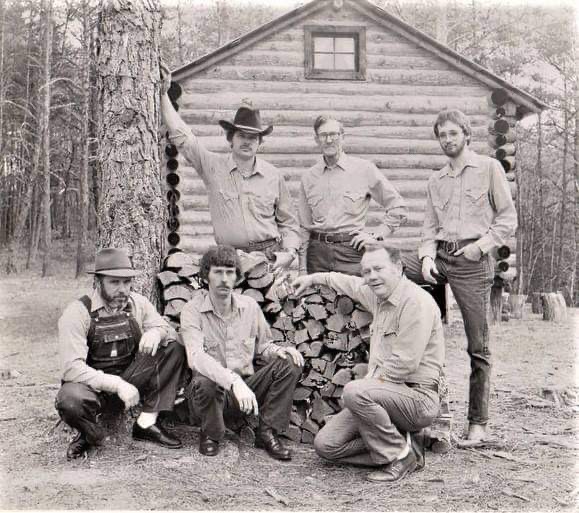
The Early Dryhill Draggers: (LtoR) Kneeling- Billy Boyd, Karl Scott, Monroe Boyd; Standing: Jimmy Boyd, Murphy Shively and Kenny Ferguson
“He said his daddy would tune up his fiddle and banjo and go out of the room and tell Murphy, ‘Now don’t you be touching those instruments. They’re all in tune.’ Well as soon as his daddy would leave the room, he’d make a dive for them. And he learned to play that fiddle like Posey Rorrer did, that played for Charlie Poole, with the least amount of effort that he could put out. And Murph had some of the best rhythm of anybody that I’ve ever sat down and played with. When you would sit down to play with that man and he’d start a tune, it would just lift you up, and take you along with it. His music would do that to you! He put everything in such an easy gait that it was a lot easier to play.”
In about 1980, Jimmy had a body shop on Dry Hill road. Every Friday night, he would brush the shop out with a broom and water the floor down to get rid of the metal dust, and all the musicians in the Dry Hill area of Franklin County would come pouring into the shop. They would play until one or two o’clock in the morning, with lots of dancers joining in. Jimmy recalled that the area got its name from a little one room school that used to be in the area. He said that you had to walk a half a mile down from the school house to a little spring to get water, so they named it the Dry Hill School.
“Well, one day a bunch of us were gathered over there,” Jimmy recalled, “And in those days we didn’t have fancy tuning instruments like they do now, we had a pitchfork, so it would take us a while to get tuned up to play. Well one day this old boy who lived over there got his banjo all tuned up and was sitting there waitin’ on the rest of us. Now he was a good clawhammer player. All of a sudden he says to us ‘You all drag around too much. Hurry up and tune up. If you don’t hurry up and get tuned, I’m calling you all The Dry Hill Draggers.’ And that name stuck for over 40 years!”
Right away, the Draggers became known across SW Virginia as a dancer’s band. People would travel miles over mountain roads to dance the Buck and Wing or their own style to the Draggers solid beats and fast tempo. “There were oodles and oodles of dancers that would come from miles and miles to dance with us,” recalled Jimmy, “They’d come from all over Virginia and North Carolina and West Virginia. We never advertised nothing. All those dancers knew we were such a good dance band that they’d figure out where we’d be playing next and call each other and there’d they be when we showed up.” In 1982, just a band for two years, The Dry Hill Draggers were invited to Knoxville, Tennessee, to represent Virginia music at the World’s Fair.
The dance following grew and grew. The Dry Hill Draggers recorded their first record, Knocking Around with the Ole Time Sound, with a large ensemble of players from their Friday night get togethers at the request of their fans and dancers. The lineup for their first recording included Jimmy Boyd and his brother Billy on banjo, Murphy Shively on fiddle, along with Carl Scott also on fiddle and some guitar, Monroe Boyd on guitar (no relation to Jimmy and Billy), and Kenney Ferguson on bass. It was recorded on the Outlet Records label in Ferrum, VA. They had been playing together for just two years.
The First Recording
“Well, we were going strong after that,” said Jimmy. “We played at the Rocky Mount Armory and the VFW and the American Legion. We played all over Roanoke and Vinton and Stuart. Now there were certain places that had a really good dance floor. And when you played there, you could bet you’d have a big crowd, you know,” Jimmy told me. “If you’ve got a cement floor, it just didn’t come across like a good hardwood floor. One of the best places, I guess, was over at the American Legion building in Stuart, VA. They had a good hardwood floor and it was upstairs. It would give, you know. You could be downstairs when they were dancing and look up and see that floor just a goin’ up and down like that,” Jimmy demonstrated with his hands.
The Dry Hill Draggers began to be in demand. “We went to all the festivals and did some travelling,” Jimmy said, “We went up to New York at least three times and to New Jersey and stuff like that. One old boy, he was very wealthy, invited us up to play at his big dance party in New York. He had about a 100 foot square white tent. There were 25 or 30 tables covered in white tablecloths under it, everything was snow white. And off to the side was a huge wooden dance floor. We had a great time playing there.”
A year after the World’s Fair, in 1983, Jimmy took the band into the studio to lay down a second album, There Will Come a Time, featuring the same lineup as their first LP. In 1985, the Draggers recorded their third LP, Budded Roses. By that time the band’s lineup had changed, as it always did over the years. Carl Scott had taken over the primary fiddler position, along with Roy Hambrick. They also both played some guitar on the recording, along with Monroe Boyd. Jimmy still held down the rhythm on his banjo, and Cordell Pinkard played the upright bass. Roy Hambrick was also featured on vocals on four songs.
Shortly after the release of Budded Roses, the Draggers went into the studio again to record their fourth album, A Daisy for You. The album was titled after a song that Roy Hambrick had penned specifically for the album. If featured the same lineup as their previous release, with Carl Scott and Hambrick sharing fiddle duties, while Jimmy drove the band with his signature banjo sound. Two years later, in 1989, The Draggers put out a cassette entitled Yellow Cat. Once again, Jimmy Boyd played banjo, Carl Scott played fiddle, Monroe Boyd played rhythm guitar, Cordell Pinkard was on bass. For this recording, George Hayden replaced Roy Hambrick on lead guitar and vocals.
Then tragedy struck the band. Carl Scott, one of the original fiddle players who was with the band for its first 10 years would have his life drastically changed in one instant. “One day we played at the fire station in Ferrum,” recalled Jimmy, “It was a fund raiser for the fire department. That evening we had to go straight to Stuart and play a dance over there. Carl had two daughters, his wife and his son,” he said.
“We got over there to the Stuart American Legion and started playing,” continued Jimmy, “And then we got word that Carl’s wife and daughter had been killed in a car accident.
It also disabled his son. Well, after that, Carl quit playing with us. He did keep playing, though. He joined a church and got away from the type of music we played. He wanted to do better, I reckon, and he got to playing a lot of gospel music and he’s real good at it. We’re still good buddies. It’ll be 31 years this May since he lost part of his family. We went to Ferrum school together. We’ve always been friends and always will be,” said Jimmy.
About the same time, George Hayden who had joined the band in 1989 succumbed to cancer. With Carl gone from the band, and no one to match Jimmy’s hard driving banjo rhythm, the band went looking for a new fiddler and they found one. It was the legendary fiddler, Benton Flippen. For the next four years, from 1990 to 1994, Benton’s pounding rhythmic fiddle would match Jimmy’s banjo. “We had played with Benton some before,” said Jimmy, “I remember one year when Benton, Carl, and the bass player and I went down to the Union Grove Festival and won it, first place. We had played some with Benton at festivals. At that time, around 1990, his band had done got old, and some of them had quit playing, and he was just playing with this ‘un, here and yonder, you know. So, I called him one day and said, ‘Why don’t you just come and play with us,’ and Benton thought for a minute and said ‘I believe I will.’ And then he stayed for four years.”
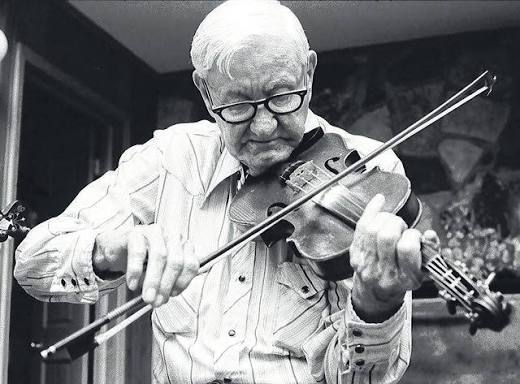
Benton was a North Carolina fiddler from Mt. Airy. He started playing music in 1938 at the age of 18. He was a powerful fiddler who followed in the footsteps of his mentor, Esker Hutchins, a highly respected local fiddler and banjo player. In the 1970s Benton gained national attention as the fiddler for his band, The Smoky Valley Boys, who won nearly every fiddle contest in the Appalachians. He, like Jimmy Boyd, was a strong rhythmic musician and was known for his unusual finger patterns and powerful slides. In 1990 he was awarded the North Carolina Folk Heritage Award. “He was a lot of fun to play with,” said Jimmy, “We loved our time with him.”
Benton Flippen
Unfortunately, the band did not record a commercial album during their years with Benton, but there are some recordings of them made by collector and musician Paul Brown and a few recordings they made while guests on WPAQ radio’s Saturday Merry go round. In 1994, he left the band. Mr. Flippen passed away in 2011.
After Benton Flippen’s departure, the Draggers would record two cassettes. The first was entitled Pallet on Your Floor, and the second was Don’t Get Trouble in Your Mind. These two recordings featured a young fiddler named Chris Prillaman and one of Jimmy’s sons, Jamie Boyd. Jamie had taken an interest in his dad’s music and with his brother Stacy had been attending many of the Draggers’ appearances at dances and festivals. When he was about 13, Jamie was with his dad at the Galax Old Fiddler’s Convention, and after watching the banjo competition said, “Daddy, next year I’m going to enter the competition up here.” According to Jimmy, he not only entered but placed in the competition that featured some of the best banjo players in the world. Jimmy began to use Jamie as a second banjo and at times he would fill in for Jimmy.
CLICK HERE TO HEAR SNIPPETS FROM 30 YEARS OF DRYHILL DRAGGERS RECORDINGS
Chris Prillaman is another testament to the old time musical gene. His great grandfather was famous in Franklin County. He was a bootlegger and fiddler know as James Walker “Peg” Hatcher. The “Peg” nickname came from his fiddle peg. Peg Hatcher became a prominent figure in the 1936 “Moonshine Conspiracy” trial that rocked not only SW Virginia, but the entire nation. Peg was recorded by music collectors from the Smithsonian and his music appeared on several collections of Virginia fiddle music. Chris’s father and grandfather had also been musicians.
He had been listening to the Dry Hill Draggers since he was very young, going to garage parties and dances with his dad and grandfather. When Chris was fourteen years old, his father became seriously ill. During that time and ash his father became worse, Chris was taken by friends to music events to help lift his spirits. Chris was just getting very interested in music, so Chris’s grandfather took him to learn to play banjo from Jimmy Boyd. He became a dancer, and loved to dance to Benton Flippen’s fiddling when he was with the Draggers. Soon, Jimmy had him learning fiddle, and as he dealt with his father’s death, he became more and more immersed in the music of Franklin County.
“I have to credit Jimmy with just about everything I know about music,” Chris told me. “He was interested in learning to fiddle and so was I. So, we’d go off together and learn to play. He would always have that fiddle with him, and he’d tell me, get my fiddle out and fool with that thing. Pretty soon I was playin’ along with Jimmy’s banjo. At first, I was just schreechin’ and scratchin’ along, and Jimmy would play so hard that he’d just carry me along. I learned to fiddle following him on the banjo!” said Chris.
Chris inherited his great grandfather Peg Hatcher’s old fiddle and started to play on it as often as he could. He jumped in and soon was playing up to the Dragger’s hard driving dance speed. Jimmy began to invite Chris up on stage to play with the band and he loved the attention the audience gave him. “Jimmy just carried me along, and before I knew it, I was A Dry Hill Dragger,” Chris said, “He made me feel confident cause he could use that banjo to just pick you up and carry you along! When the Draggers got behind you, you just went with them.”
Chris remembered the heyday of the band in the 1990s. “You’d look out there in the audience and there would be a sea of white hair. Everyone of those old folks would be dancing their hearts out to the band. It was so much fun. It was almost embarrassing, though, because I was just following them along, I had no idea how to lead on the fiddle.”
Chris Prillamen
Slowly, Jimmy started playing less with the band, encouraging his son Jamie to take over the role of banjo player and of driving the band’s sound. “Sometimes it’s hard to tell on a recording if it was me or Jamie playing the banjo,” Jimmy said, “He developed a dance lick on that banjo that sounds a lot like mine.”
Chris and Jamie Boyd began to learn tunes together, trying to keep the Dragger’s dance tempo and driving rhythm going. Soon, the Draggers were younger, with new guitarists and vocalists joining them, but retaining Jimmy’s sound and influence. Sometimes Jimmy would double up on banjo with his son, Jamie, and sometimes they would invite Billy Woods, another local fiddler, to join them for a twin fiddle, twin banjo sound.
Playing old time music was not the only skill Chris Prillaman learned from Jimmy Boyd.
After his dad died, Chris started spending a lot of time with the Boyd family, staying at their farm for long periods of time. Jimmy would take him hunting and fishing, and soon Chris was asking Jimmy to show him how to make shine. Both of Chris’s great grandfathers had been indicted in the Moonshine Conspiracy and making shine was another genetic imprint Chris wanted to follow.
“Jimmy got me started, and I worked hard at it,” said Chris, “I had it in my blood. The first liquor I ever made was with Jimmy. I wanted to make some so bad. When I was a little boy, my cousin’s grandpa had two pot stills and me and my cousin snuck up on Dry Hill Road and there was a big underground still site. It just fascinated me.”
“Finally, I got all the stuff together to try to make my own shine, and I begged Jimmy to show me, to help me. Well, we got together and made a batch together. It was a good time. The smell and the work and everything, I was hooked on making it,” said Chris.
Chris was hooked. He perfected his style of distilling based on Jimmy and other local elders who remembered the old ways of making liquor, who knew the traditional styles of both corn liquor and fruit brandies. In 2015, Chris bought a warehouse in Rocky Mount and started the first legal liquor distillery in the wettest county in America. However, after experimenting with town water in Rocky Mount, he decided to move his distillery out of town to take advantage of Franklin County’s pure spring waters. He then opened a tasting room in Rocky Mount, right next to the Harvester Center, a popular music venue.
The Twin Creeks distillery features a fiddle on their mason jar labels and prides itself in carrying on the traditions of the area, making shine as close to the old recipes as state regulations will allow. Genetics and tradition, the Boyd family way.
The Twin Creeks Stringband: LtoR: Jared Boyd, Jason Hambrick, Chris Prillaman, Stacy Boyd
Stacy Boyd, another of Jimmy’s son, had first become aware of old time music at the age of 10, when his father started playing the banjo. He loved to accompany his dad to the Draggers’ parties and performances and was soon learning to dance with the band. “I loved going places with my dad,” he told me. “It was so much fun, always.” He started out in the early 1990s trying to learn the upright bass because he wanted to join in on his dad’s fun. In 1987, he met Vickie Sutphin, a member of the musical Spangler family from around Laurel Fork, VA. Vickie’s Uncle, Arnold Spangler, had helped found and played fiddle for The Laurel Fork Ramblers, a well-known string band in the area. Genetics at it again. Vickie and Stacy met at a Dry Hill Draggers dance. She had been following the Draggers, dancing to them whenever she could. She has become the historian of the band and still attends every performance.
When their son Jared was born, Stacy began to take a real interest in playing the bass. He played on stage with the Draggers at the Galax Old Time Fiddler’s Convention, and then started playing regularly with the Draggers. At this time, Chris Prillaman, who Stacy had known since they were boys, was fiddling and Stacy’s brother, Jamie, was playing banjo most of the time. Jimmy would make an occasional appearance with the band, doubling on banjo.
“I felt like I had the rhythm, I would study what Cordell was doing in the band, and one day the bass started to come to me,” said Stacy. About this time, another childhood friend joined the band, Jason Hambrick. Jason had learned guitar and singing from his father, Roy Hambrick, who had been with the Draggers for two recordings. Jason could play the guitar well and had learned his father’s singing repertoire. “Jimmy had encouraged me all along. He knew I had it in my genes,” Jason told me. When his father passed away, Jason began to take a real interest in keeping his father’s legacy with the band alive and Jimmy and the other band members welcomed his talent.
After a long dry spell, and a few years of slowing down their appearances, the Dry Hill Draggers went back into the recording studio. By 2006, the new generation of Draggers emerged. Stacy Boyd on bass, Jason Hambrick on guitar and vocals, Chris Prillaman on fiddle along with Billy Woods, and Jamie Boyd was primarily on banjo, with Jimmy Boyd joining them occasionally. They went to the recording studio again in 2009 and recorded their first CD, Take a Drink on Me. After nearly 30 years, the musical torch had been passed.
Over the next few years, the Draggers kept the torch going, playing at festivals and dances throughout Southwest Virginia and “holding court” as they always did in the campgrounds of the Galax Convention. For the big festivals Jimmy would join them, but spent less time accompanying them at dances and smaller venues. 2011 found them in the studio again, recording a 30th anniversary CD. This concept album had the younger Draggers going back to rerecord some of the Draggers’ earlier songs and tunes with the new younger lineup. The CD features Jason Hambrick honoring his father’s memory by singing “A Daisy for You,” a song that his father had penned and recorded during his years with the draggers. In 2013, The Dry Hill Draggers released their tenth recording, Dreaming of a Little Cabin, with the same configuration as on the 2009 and 2011 CDs.
In the late 2000s the band began to change again. Jamie Boyd and fiddler, Billy Woods, left the band. Stacy and Vickie Boyd had been devoting much of their time to raising their son Jared. Although Jared had been around old time music all of his life, he hadn’t taken much interest in playing music. “To be honest, my parents decided, around 2007, when I was 11, they decided I would learn to play music. They enrolled me in Junior Appalachian Musicians (JAMs) program at the Blue Ridge Music Center,” said Jared. “I went there once a week to learn banjo from Ray Chatfield. For the first year, my parents made me practice 30 minutes a day on the banjo. I wasn’t all that excited about it,” Jared said.
“After about a year, I realized I had it in my genes, in my blood. We’d go over to see my grandpa, Jimmy, once a month and he would give me lessons. He got me excited about it,” Jared told me. “I started realizing I had the Spanglers on one side and the Boyds on the other, and there was no way I could avoid playing. It took a while. I told myself, maybe my parents will give up on me.”
“After a few years, I started to going to festivals and competing in banjo contests, and I realized I was starting to get pretty good,” said Jared. “By the time I was in high school, I was loving playing banjo.” In 2013, Jared applied for and received a Virginia Folklife Program award to study under his grandpa, Jimmy Boyd, learning both clawhammer banjo and stories of the moonshine culture.
Jared formed his own bands through high school and began winning most of the banjo contests in the area. In 2010 he played in a band called Old Grass that was made up of former JAMs graduates. His peers and his teachers recognized that Jared had exceptional timing. Some of the professional musicians in the area, like Mac Traynham in Floyd County and fiddler Eddie Bond in Grayson County, took an interest in Jared and began to teach him local tunes.
“Since I learned a lot from Ray Chatfield, I play a more melodic style. I didn’t really play my grandpa’s style, but I felt like I got his sense of rhythm. Like grandpa, I didn’t drop thumb at all, but I started studying the playing of Kyle Creed and his style seemed to have more of what I was wanting. Somewhere along the line, I taught myself to drop my thumb like the Round Peak players do. That upped my style,” said Jared. “Then, at the same time, Eddie Bond of the New Ballard’s Branch Bogtrotters took an interest in my playing. And I got to learn to play with him. After that, people started asking me to fill in with their bands and I gained confidence. Jared was encouraged by his father to play on stage with the Draggers.
In 2017, Jamie Boyd, Jared’s uncle, decided to leave the Draggers. Since they had dates planned, Jared filled in for Jamie on the banjo. After those dates were finished, the band, Chris Prillaman, Jason Hambrick, Stacy Boyd and Jared Boyd, decided to continue playing together. “The defining character of the band had been the banjo. When I took over, the banjo sound of my grandpa and uncle had been consistent, but my style is very different. So, we decided to continue the Boyd family tradition, but to change the name of the band.”
The Twin Creeks String Band honors their history by playing fast, hard driving dance music. It’s named for the confluence of creeks near Rocky Mount and for Chris’s distillery. “It was hard for me to keep up at first,” said Jared, “At first, Chris was used to being pushed by the banjo. All of a sudden, they were having to bring me along with them. But we worked it out.”
In 2020, the Twin Creeks Stringband recorded their first CD, Lee Highway Blues. It was very well received by old time radio shows and is selling well through County Sales and other outlets. The 40-year tradition of the Boyd family’s music and moonshine continues to provide fun and dancing across Southwest Virginia through genetics and rhythm.
These days Jimmy spends his time enjoying his grandkids, telling stories, and making an occasional appearance with Twin Creeks at festivals. Every year he totes a large submarine pot still over to the Virginia Folklife Festival at Ferrum College and demonstrates the dying Southwest Virginia art of moonshining for appreciative crowds. It’s in his heart and in his blood and like old time rhythm, it’s in his genes.
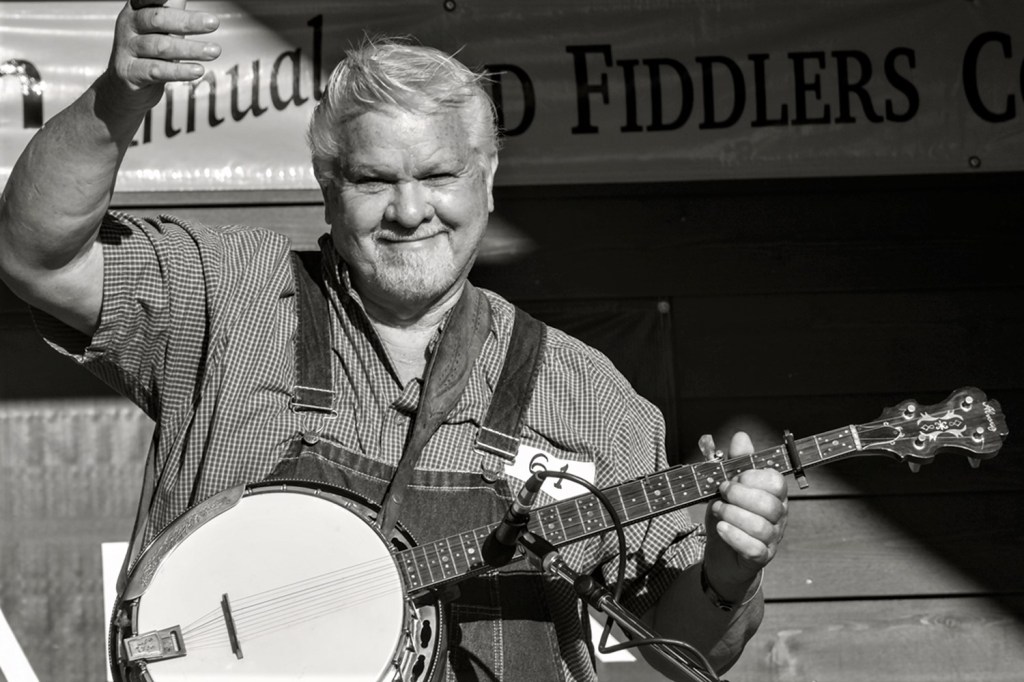
Jimmy Boyd at the Galax Old Fiddler’s Convention (Photo by Sam Linkous)
Interviews Conducted
Stacy Boyd, Interview conducted by Malcolm Smith, March 14, 2021, Laurel Fork, VA.
Vickie Sutphin Boyd, Interview conducted by Malcolm Smith, March 14, 2021, Laurel
Fork, VA.
Jared Boyd, Interview conducted by Malcolm Smith, March 14, 2021, Laurel Fork, VA.
Jimmy Boyd, Interview conducted by Malcolm Smith, March 21, 2021, Franklin County, VA.
Chris Prillaman, Interview conducted by Malcolm Smith, April 8, 2021, Rocky Mount, VA.
Jason Hambrick, Interview conducted by Malcolm Smith, April 8, 2021, Rocky Mount, VA
References
Dry Hill Draggers, Liner Notes, 11 Recordings, 1982-213
Edward D. Ives, (1990) The Tape Recorded Interview: A Manual for Field Workers in Folklore
and History, Fourth Edition, University of Tennessee Press
Kenneth S. Goldstein, (1964) A Guide for Field Workers in Folklore, Hatboro, PA, The
American Folklore Society
Don Harrison, (2017), August, A Back Woods Q and A with the Last of the Old Time
Moonshiners, Savor Virginia, retrieved April 10, 2021 from: